






Rwanda is strengthening its position as one of Africa’s leading innovation ecosystems through targeted investments in technology, entrepreneurship and gender inclusion.
Among the latest initiatives is the WIPO Pitch and Protect Program for Women in STEM, implemented by the World Intellectual Property Organization (WIPO) in partnership with the Rwanda Development Board and supported by the Japan Patent Office.
The program brings together policy coordination, technical expertise and practical training to support women innovators in transforming ideas into protected and scalable ventures.
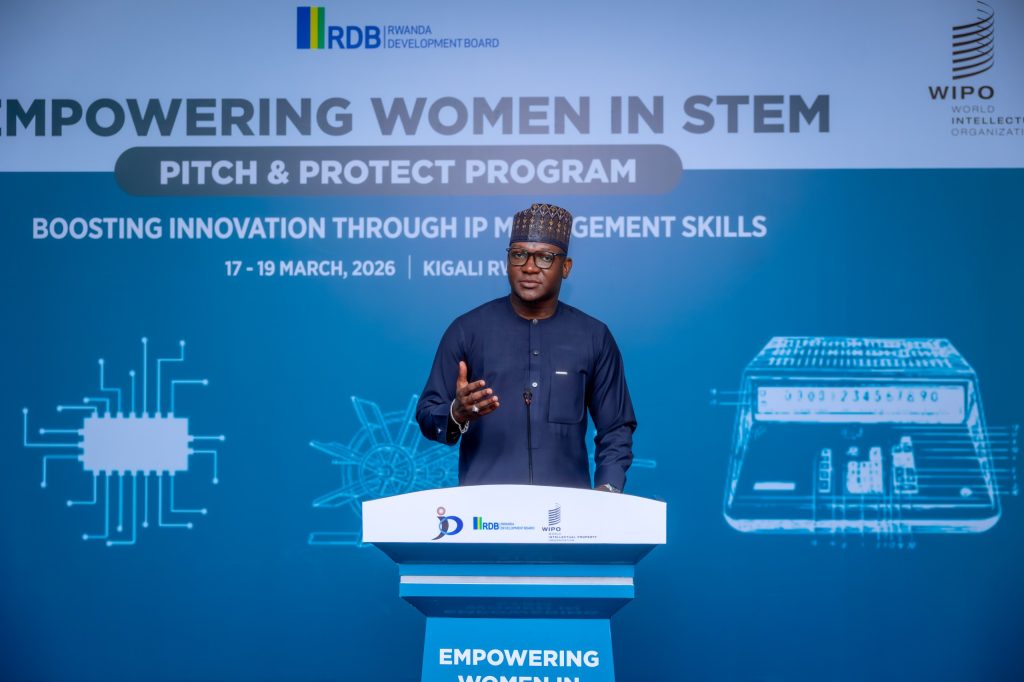
At the centre of the initiative is David Jeng, an intellectual property and innovation expert working across Africa, contributing to efforts to bridge the gap between innovation and commercialization.
Despite increasing innovation activity across the continent, ownership and value capture remain limited. Africa accounts for less than one percent of global patent filings, underscoring the persistent gap between creativity and protection.
Jeng emphasizes that intellectual property is central to addressing this challenge.
“Intellectual property transforms innovation into a competitive asset. Without protection, ideas remain exposed and difficult to scale,” he said.
Through the program, participants are introduced to key intellectual property tools, including patents, trademarks and industrial designs. The training also focuses on integrating IP into business strategy, market positioning and investment readiness.
The initiative further highlights structural challenges within the innovation ecosystem.
Women remain underrepresented in intellectual property systems, accounting for less than 15 percent of patent filings in Africa.
Limited access to finance, networks and technical support continues to constrain their ability to commercialize innovations.
To address these gaps, the Women in STEM program combines training with practical exposure.
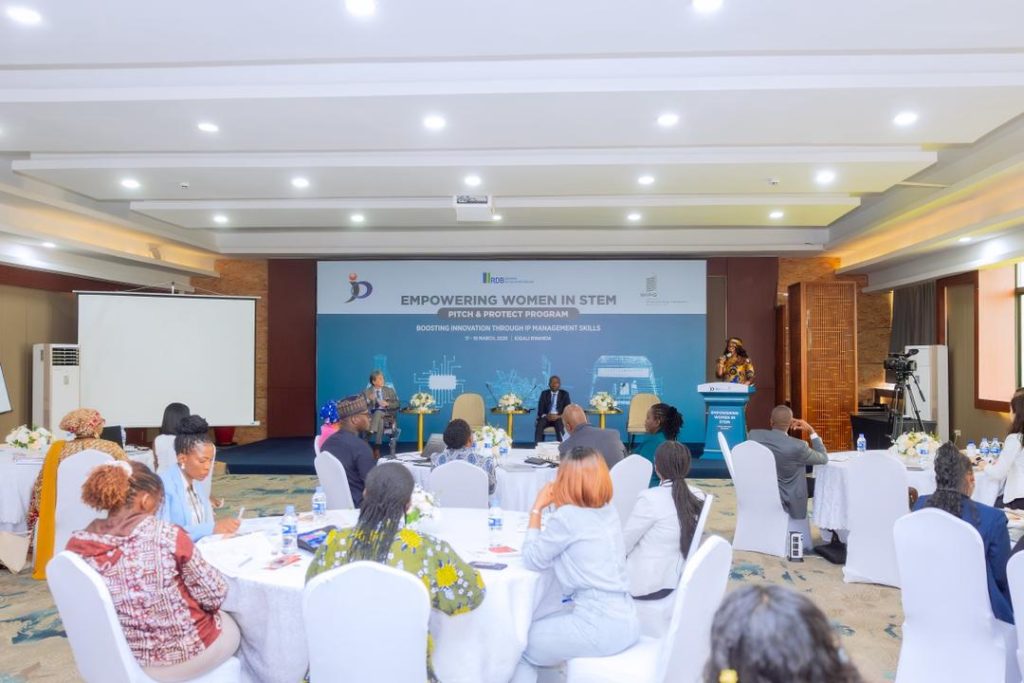
A cohort of 50 female STEM professionals, including innovators, entrepreneurs, researchers and PhD students, participated in the initiative.
They benefited from an intensive three-day conference that combined technical sessions, mentorship and applied learning.
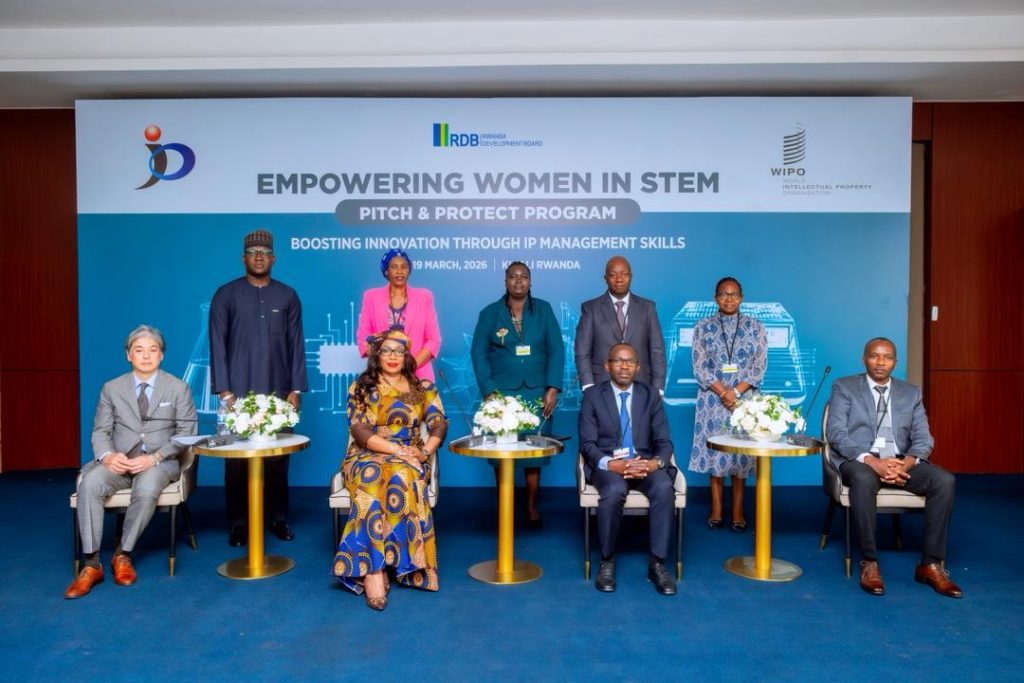
Participants were drawn from Botswana, Ethiopia, Ghana, Kenya, Mauritius, Namibia, Nigeria, South Africa, Uganda, Tanzania and Rwanda, countries that rank among Africa’s leading performers in the Global Innovation Index.
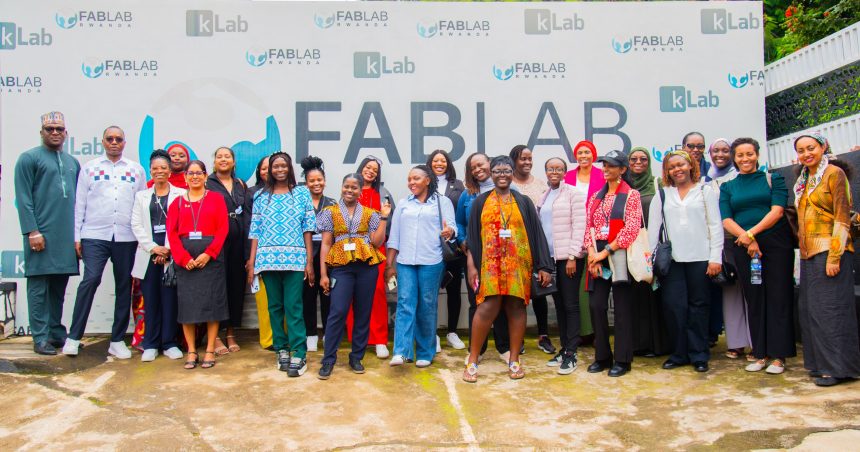
As part of the program, participants visited KLab Kigali and Fab Lab Rwanda, where they engaged with innovation hubs and explored prototyping tools and maker spaces.
These visits provided practical insight into how ideas can be developed into viable solutions within a supportive ecosystem.
Jeng noted that exposure to functional innovation environments is critical in shifting mindsets.
“When innovators interact with real systems, they begin to see clear pathways from concept to implementation,” he said.
The program is anchored in collaboration between international and national institutions.
WIPO provides global expertise in intellectual property systems, while the Rwanda Development Board aligns the initiative with national development priorities.
The Japan Patent Office contributes both technical and financial support.
Stakeholders note that such partnerships are essential for delivering coordinated and sustainable innovation support.
The initiative also reflects Rwanda’s broader policy direction, where innovation is increasingly positioned as a driver of economic transformation.
Expanding opportunities for women in STEM is seen as critical to increasing participation in high-value sectors and strengthening national competitiveness.
Jeng, who has supported more than 10,000 entrepreneurs across over 15 African countries, says the focus must now shift from idea generation to ownership and scale.
“Africa has strong innovation potential, but the emphasis must be on protection, commercialization and long-term value creation,” he said.
As Rwanda continues to invest in its knowledge economy, initiatives such as Pitch and Protect are expected to play a pivotal role in ensuring that innovation translates into sustainable business growth and broader economic impact.