
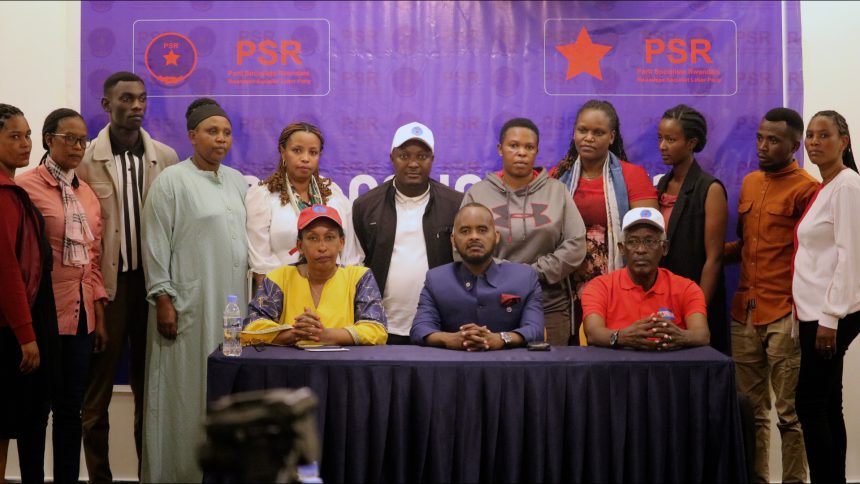
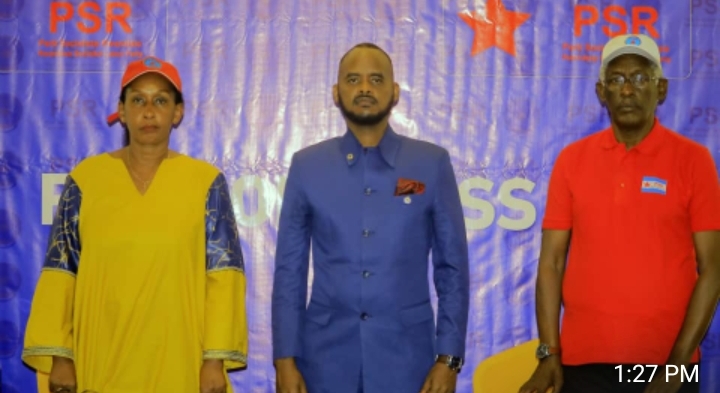
Rwanda’s Socialist Labour Party (PSR) has outlined plans to expand its grassroots structures, strengthen youth and women leadership, and deepen collaboration within the ruling coalition as it seeks a more visible role in national development under new leadership.
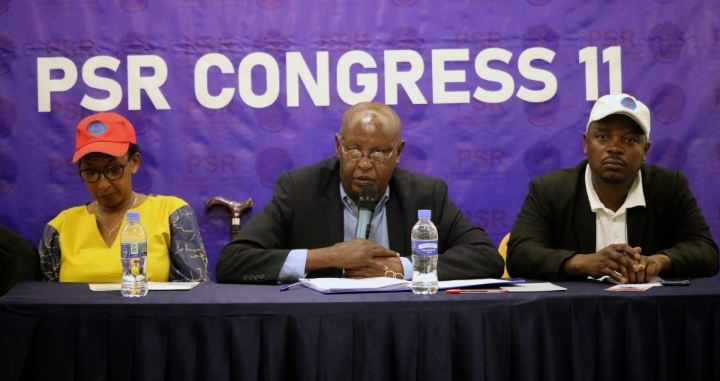
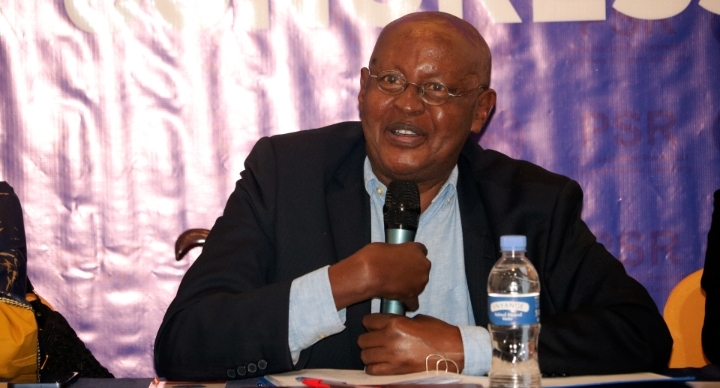
In an exclusive interview with Taarifa, newly elected PSR president, Me Olivier Ngoga Mukama said his immediate priority is to reinforce the party’s administrative structures, particularly among young people and women, who make up the majority of its membership.
“We already have youth and women leagues, but there has been a gap in collaboration with other levels,” Mukama said.
“The political arena has changed since 1994, and many leaders are young, which is why strengthening these levels is very important.”
The Parti Socialiste Rwandais (PSR), founded in 1991, is one of Rwanda’s 11 registered political parties and part of the coalition led by the Rwanda Patriotic Front (RPF-Inkotanyi). The coalition aims to implement the national development agenda for 2024–2029.
Mukama, a lawyer and longtime party member, took over leadership on Feb. 13 from founding president Jean Baptiste Rucibigango, pledging continuity while revitalizing party activity and public engagement.
Focus on employment and policy advocacy:
Central to PSR’s platform is employment promotion, particularly tackling youth unemployment.
Me Mukama said the party plans to first assess the labor market before proposing policy recommendations in collaboration with parliamentarians, trade unions and other institutions.
“Youth unemployment cannot be assessed in isolation,” he said.
“It involves the economy, the number of job seekers and the skills needed to be employable. We will focus on this during our five-year mandate, working with trade unions to address the problem.”
He emphasized that PSR intends to conduct research, consultations and policy discussions before presenting formal positions, in line with its socialist ideology centered on labor rights and social justice.
Coalition alignment with RPF agenda:
Mukama said PSR’s participation in the RPF-led coalition since 2024 has been smooth, noting that the party’s objectives align with national priorities set by President Paul Kagame.
“We have the same agenda. It may be said in a different way but with the same aims and goals,” he said, citing job creation and technical education expansion as shared priorities.
“We cannot have another program besides the one agreed with the RPF because there is no contradiction.”
He added that PSR representatives in parliament have contributed to legislation, including advocacy on labor law reforms such as paid maternity leave.
Expanding grassroots and media presence:
The new president acknowledged that PSR’s visibility declined in recent years but said the party has now elected officials at district level and plans to expand to village structures by the end of his mandate.
He also pledged stronger media engagement through a dedicated liaison officer and closer collaboration with local outlets. “This will slowly increase awareness and engagement,” Mukama said, adding that socialist ideology focused on employment and advocacy is “easy to explain to citizens.”
Overcoming political hesitancy:
Mukama noted that Rwanda’s political participation has been shaped by the legacy of the 1994 genocide, which initially left many citizens wary of political party involvement. He said attitudes are gradually changing as civic education increases.
“More citizens are no longer afraid, and we are educating them slowly to participate,” he said. “Even some of the elite were afraid before, but the more we get closer and educate them, the more they understand.”
Inclusion of women and marginalized groups:
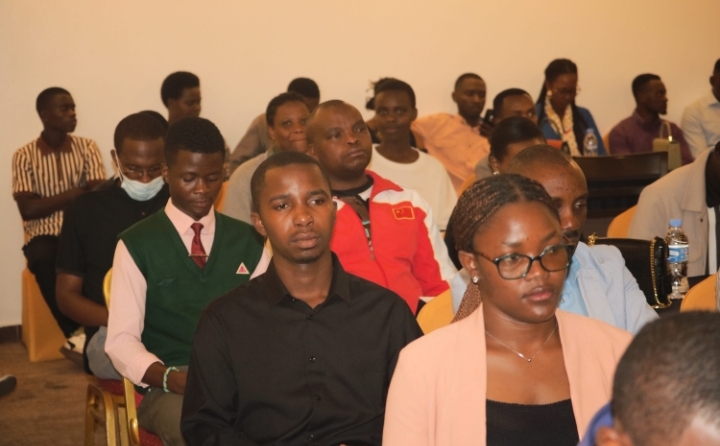
PSR currently has gender parity in its executive and about 30 percent female representation at grassroots level, Mukama said. The party aims to expand inclusion through advocacy and education, particularly among marginalized women.
“Advocating for marginalized groups is part of our agenda,” he said, highlighting education access and sign-language promotion for people with disabilities as future priorities.
Mukama, who has spent more than two decades in PSR, said his leadership will largely continue the party’s collaborative model under Rucibigango while revitalizing its implementation.
“There is no new agenda but to lead the party in the same model — collaborating with others and working with trade unions,” he said. “We will revamp this model, which at some point was not fully used.”