



$20 Million SAIP II Boosts Farming, Processing, and Food Security in Rwand
The Rwanda Agriculture and Animal Resources Development Board (RAB) says more than Rwf 28 billion (about $20 million) has been invested under the Sustainable Agricultural Intensification and Food Security Project Phase II (SAIP II) to raise agricultural productivity and improve post-harvest handling across Rwanda.
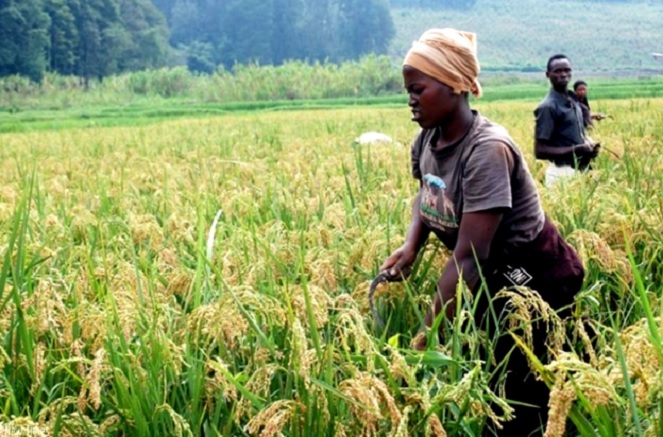
The project supports farmer training, modern production techniques, and capacity building to strengthen food security and increase incomes.
Progress was recently reviewed during a consultative meeting with SAIP-supported farmers from Huye District on February 24, 2026, focusing on experience sharing and yield improvement.
Launched in 2024 and operating in 20 districts, SAIP II has transformed livelihoods such as that of fruit farmer Darius Havugarurema, who now cultivates over five hectares productively after receiving seedlings, irrigation equipment, and project subsidies.
His initial harvests have already generated Rwf 6–7 million.
The project also supports agro-processing.
Rice processor Mutabaruka Théophile, based in the Sovu Industrial Zone, expanded his operations with SAIP backing, including a Rwf 650 million animal feed factory that will convert rice by-products into livestock feed.
Farmer cooperatives such as the Tuzamurane Cooperative have also benefited from training, climate-resilient practices, and post-harvest equipment, reducing losses and creating new income opportunities.
According to SAIP Project Coordinator Mutabaruka Ezra, the initiative prioritizes small-scale irrigation, post-harvest handling, storage, and market access.
Investments include storage facilities, cold rooms and trucks, over 200 greenhouses, and modern machinery.
Overall, SAIP II represents a $20 million investment—$5.7 million of it for irrigation—driving long-term gains in productivity, resilience, and national food security.