





President Paul Kagame has said that Rwanda’s strained relations with the Democratic Republic of Congo are rooted in persistent security threats, not allegations of mineral exploitation or territorial ambition.
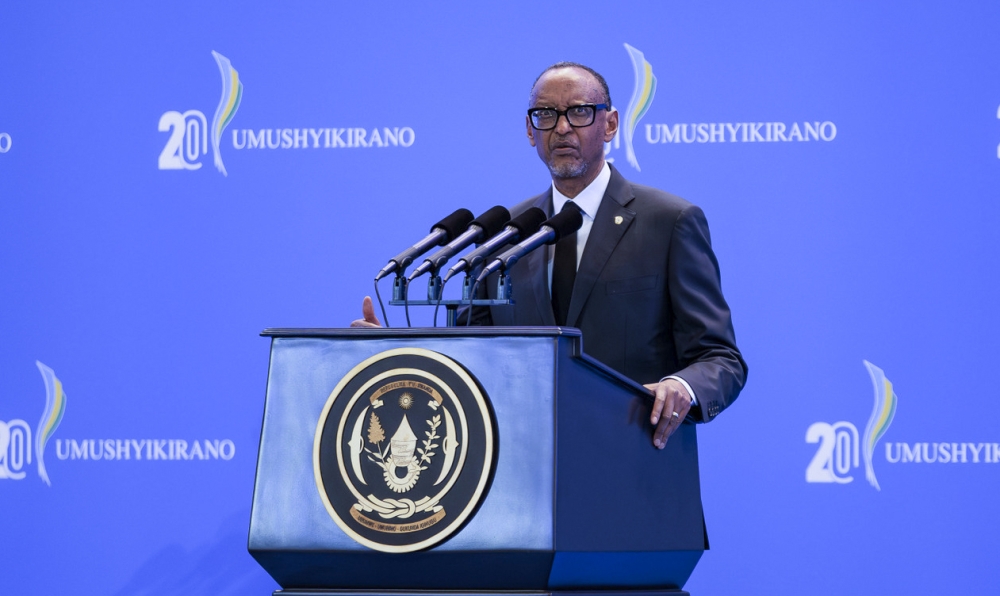
Addressing the National Dialogue Council, Umushyikirano 2026, Kagame rejected claims that Rwanda’s involvement in regional affairs is motivated by a desire to expand its territory or access Congo’s mineral wealth, describing such accusations as a deliberate distraction from what he called the real and dangerous problem.
“They claim we are in Congo looking for minerals… that Rwanda is small and wants to expand,” Kagame said. “But they try to avoid the real issue, which they also know and in which they themselves are involved.”
The President pointed to the FDLR, formerly the Interahamwe militia responsible for the 1994 Genocide against the Tutsi, saying its fighters have been settled in eastern Congo for years, armed, and in some cases integrated into the Congolese national army, while others operate alongside it. He said this development has elevated the threat from a non-state militia to what Rwanda considers a direct and organized security risk.
Kagame further warned about the continued spread of genocide ideology in eastern Congo, which he said is being propagated openly and targets indigenous Congolese citizens of Tutsi origin. According to him, this ideology fuels violence, displacement and persecution, echoing the same forces that once devastated Rwanda.
He also cited sporadic cross-border attacks launched from Congolese territory into Rwanda, saying these incidents underscore the immediacy of the threat and the impossibility of ignoring armed groups operating near Rwanda’s borders.
“How does the world expect us to behave?” Kagame asked. “Just listen to them and do whatever they ask us to do, even if it is leading to our own destruction?”
The President criticized what he described as international reluctance to confront the presence and role of genocidal forces in Congo, arguing that Rwanda’s security concerns are often minimized or reframed to fit geopolitical narratives.
Kagame’s remarks come amid renewed diplomatic pressure and international debate over instability in eastern Congo. Rwandan officials have repeatedly maintained that Rwanda’s position is anchored in self-defense and the protection of civilians, both within its borders and among vulnerable communities across the region.
Umushyikirano, which brings together citizens, leaders and institutions to discuss national priorities, has increasingly served as a platform for Rwanda to articulate its stance on regional security, historical accountability and sovereignty alongside its domestic development agenda.