


Two retired officers, veterans of Rwanda’s liberation struggle, believed they had found a new mission. This time, not on the battlefield, but on the broken and dangerous transport corridors linking Rwanda to Eastern Democratic Republic of Congo.
They identified the Bukavu and Goma routes as chaotic, underserved, and risky. Unregulated operators dominated these corridors, exposing passengers to danger and, in some cases, facilitating insecurity. Authorities acknowledge the problem, but suitable alternatives remain elusive.
Seeing a gap, the veterans envisioned a solution. They registered Uruyenzi Supplier LTD, a transport company built on professionalism, safety, and environmental responsibility. Their ambition was bold: to introduce state-of-the-art electric coaches that would modernize cross-border travel between Bukavu–Kigali and Goma–Kigali.
The project proposed direct, non-stop travel with no domestic passengers along the way. The fully electric buses were designed with CCTV surveillance, refreshment chambers, sanitary facilities, and modern comfort features—aimed at restoring dignity, safety, and reliability to cross-border transport.
They invested time, expertise, and personal resources into the project. A detailed business plan was developed. Operating licenses were secured in the DRC. Financing discussions were initiated with a local bank. Everything appeared to be falling into place.
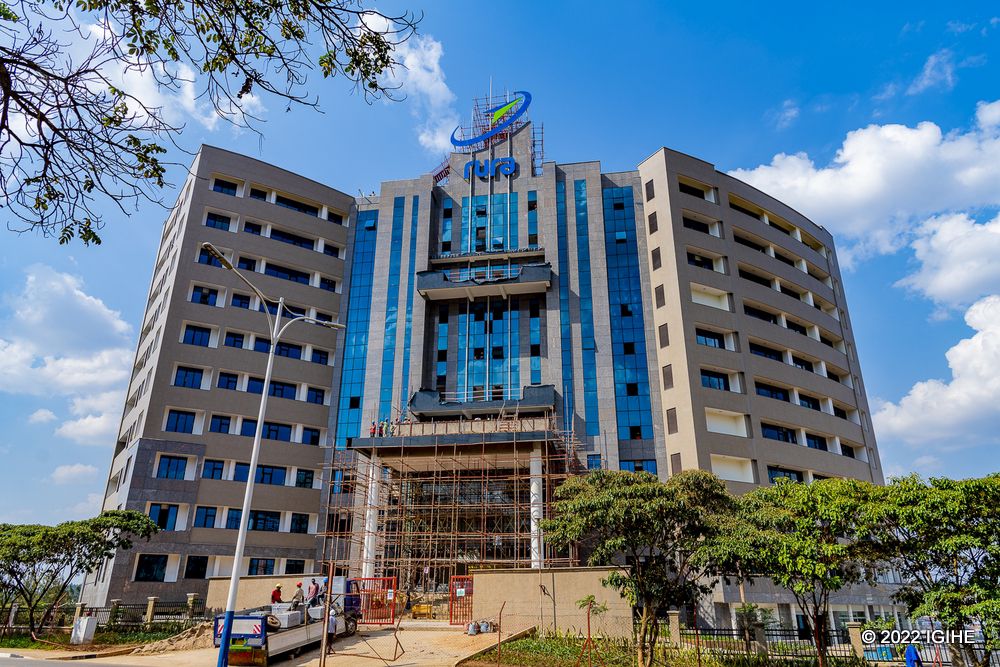
Then they encountered RURA, the regulator and gatekeeper.
Their first application, submitted in August 2025, was rejected without explanation. A subsequent request for a provisional license went unanswered. Phone calls were ignored. Emails disappeared. Each visit to RURA felt like stepping into a bureaucratic web designed to exhaust and discourage.
Eventually, they secured a meeting with the Director General, Evariste Rugigana, who informed them that proof of parking was a mandatory requirement for a provisional permit.
By November 2025, they had complied with every requirement except parking. Bus parks, however, are tightly controlled and heavily monopolized. Some operators control vast yards, others barely a space, while some operate without any at all. For newcomers like Uruyenzi Supplier LTD, access was effectively blocked.
Each return to RURA sent the veterans back into the city, chasing signatures and forms in an endless loop. Sources later told Taarifa that licenses are often sold to the highest bidders long before requirements are met. The system, they said, rewards connections and cash—not merit. When the veterans offered to invest in a designated parking facility themselves, RURA rejected the proposal.
Still, they persisted.
Taarifa raised the matter directly with the Director General, seeking clarity, accountability, and transparency. He contacted Beatha Mukangabo, the Director of Transport, to explain the hesitation surrounding the license.
What followed exposed the bureaucratic ping-pong that had defined the veterans’ experience. Mukangabo had previously told them she needed “guidance” from her superior—a term commonly used, sources say, to deny service without formal refusal. That guidance never came.
When responsibility appeared to be shifting back to the Director General, Mukangabo’s explanation became riddled with contradictions. She questioned whether the veterans would genuinely operate the DRC route, despite their submission of a valid operating license from Congolese authorities.
The contrast was stark. While the Director General acknowledged the gap on the Bukavu–Goma routes and appeared supportive of the concept, Mukangabo’s posture remained openly hostile and obstructive—raising serious concerns about bias and compromised decision-making.
Despite being fully aware that the parking requirement was a dead end within a captured system, the Director General again advised the veterans to secure parking.
Later that same day, Taarifa learned that during a meeting at Nyabugogo Bus Park—attended by RURA, other government agencies, ATPR, and Jali officials—Mukangabo explicitly instructed ATPR and Jali not to respond to Uruyenzi Supplier LTD again. In the same meeting, she reportedly approved licenses for three yet-unknown local companies.
The message was deliberate and final.
Months of chasing files, waiting in reception halls, and navigating endless bureaucracy culminated in a silent rejection that crushed the hopes of genuine entrepreneurs. The system had closed its doors.
Behind the scenes, junior RURA officials were more candid. Several admitted, off the record, that securing a license or meaningful service without paying large sums was nearly impossible. According to them, senior officials act as gatekeepers, protecting existing transport companies from competition.
“They live lavishly,” one source said. “Their assets are visible. It’s not difficult to investigate.”
Another source revealed that details of the Uruyenzi Supplier LTD project had been shared internally with powerful industry figures. When they realized the scale, quality, and competitiveness of the project, panic set in. The instruction, the source said, was to block it.
Without money or patronage, no file would move.
RURA reportedly has about ten pending transport license applications. Uruyenzi Supplier LTD stands out as the only applicant seeking a cross-border route. That distinction, multiple sources said, sealed its fate.
One domestic transport official was blunt. “Forget it. They will never get it. The industry is full of mafias, and RURA officials feed on them.”
The struggle has another layer. Rwanda’s transport industry is dominated by senior veterans—generals, colonels, and liberation-era elites. For former subordinates, even those equally qualified and visionary, breaking through is nearly impossible.
It is an invisible wall.
For the two veterans, the personal cost has been immense. They hoped to contribute to national development, solve a real transport problem, and promote green mobility. Instead, they found themselves trapped in a bureaucratic nightmare, fighting invisible forces in a system designed to protect the privileged.
Taarifa documented similar cases. Investors queue endlessly at RURA offices. Phone calls go unanswered. Emails receive no replies. Meetings are postponed indefinitely. Each step forward is met with arrogance, dismissal, and hostility.
The implications are stark. Institutions meant to promote good governance, transparency, and fair competition have instead become playgrounds for insiders. Honest entrepreneurship is stifled while corruption thrives in plain sight.
For Uruyenzi Supplier LTD, the lesson is bitter. Even those who once fought for the country’s freedom find that integrity and ambition are no match for a captured system.
In Rwanda’s transport industry, the battle for fairness has proven harder than any battlefield they ever faced.
Who will serve them justice?