






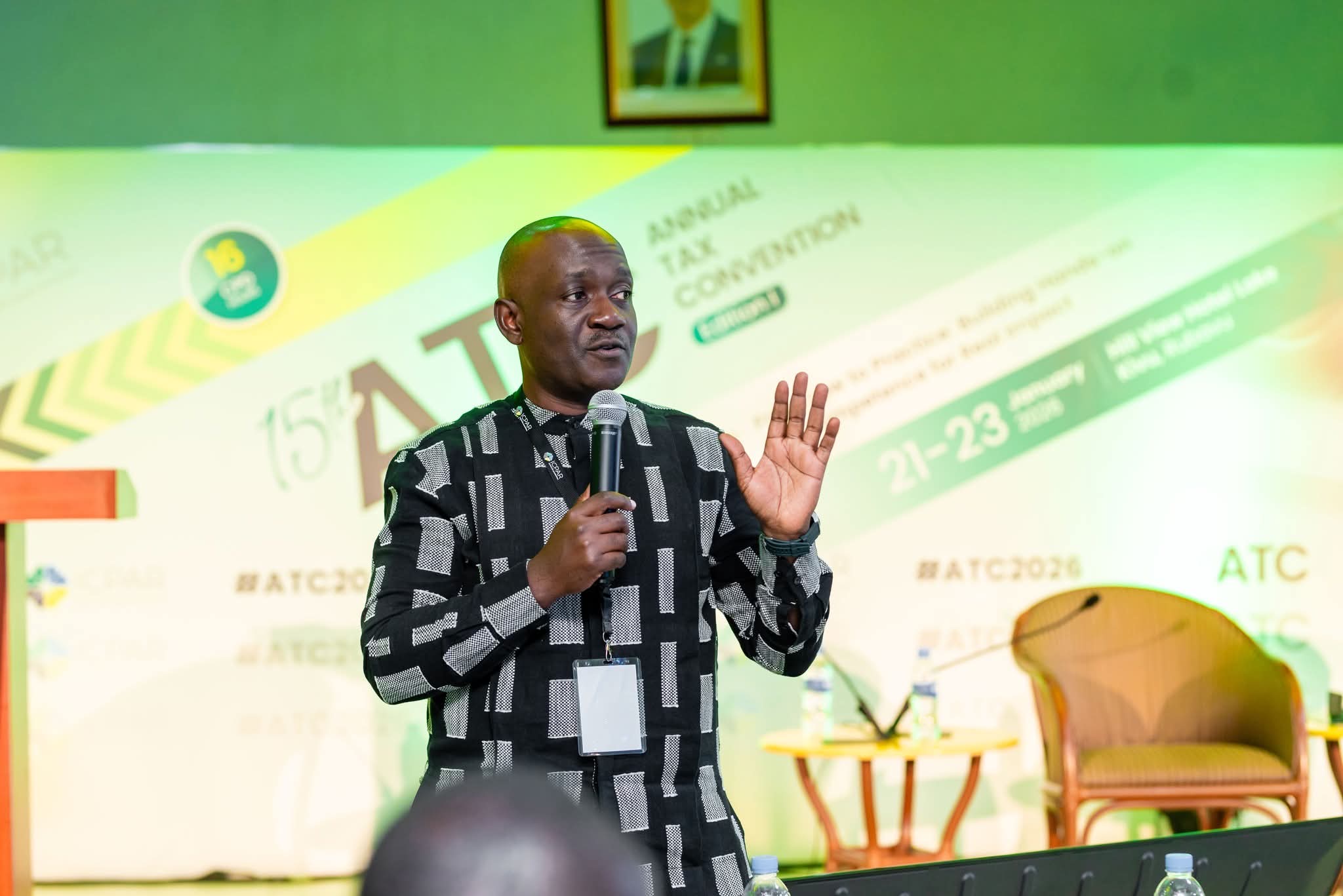
The 15th Annual Taxation Convention closed with a strong and unambiguous message to tax professionals: the future of corporate tax practice lies in proactive, defensible mastery rather than reactive compliance.
The shift was most clearly articulated during the Corporate Income Tax session by Paul Frobisher Mugambwa, Head of Tax and Fiscal Policy at PwC Rwanda, who urged delegates to rethink what true compliance means in an increasingly complex and high-risk tax environment.
He emphasized that reducing errors is no longer simply about avoiding penalties but about creating certainty, safeguarding profits, and giving management the confidence to focus on business growth.
The level of engagement during the question-and-answer sessions reflected a growing readiness among practitioners to move beyond routine filing toward returns that are accurate, defensible, and strategically sound.
Mugambwa’s practical presentation underscored that effective tax management begins with precision rather than shortcuts, reinforcing the idea that a defensible filing is just as valuable as an optimized one.
Delegates examined critical areas that frequently expose businesses to risk, including error-proofing tax returns, exercising sound judgment on deductions, capital allowances, thin capitalization risks, loss utilization, and the treatment of disposals.
These discussions consistently highlighted the importance of careful documentation and informed decision-making in protecting tax positions.
Further depth was added by Charles Tumusiime, Senior Manager for Tax and Regulatory Compliance at GarnetPartners, who delivered a detailed breakdown of Corporate Income Tax fundamentals.
His session clarified the determination and sources of taxable income and distinguished between allowable and non-allowable deductions, offering practical guidance aimed at strengthening compliance and improving reporting accuracy.
The convention also featured a hands-on session on transfer pricing practice led by Timothy Gatonye, Director of Tax Strategy and Transfer Pricing Services at Andersen.
His presentation focused on compliance in intragroup services and financing arrangements, benchmarking, and the need for audit-ready documentation as a core component of effective risk management.
Across the three-day convention, discussions repeatedly returned to high-risk areas that attract regulatory scrutiny, including transfer pricing adjustments, thin capitalization, withholding tax exposure, and financing recharacterization risks.
These themes reinforced the broader conclusion that preparedness and precision are now central to sustainable tax practice.
As the convention concluded, delegates departed with a clearer understanding that tax is no longer a narrow compliance obligation but a strategic business function.
Equipped with deeper technical insight and a stronger focus on defensibility, participants were encouraged to elevate tax management into a proactive tool for risk control, credibility, and long-term value creation.