





Rep. Marjorie Taylor Greene’s latest remarks on drugs, foreign policy, and U.S. military intervention reflect a growing strain of populist skepticism that cuts across traditional party lines and increasingly shapes the Republican base.
Greene, a Georgia Republican and member of the House Homeland Security Committee, has framed the fentanyl crisis as evidence of misplaced national priorities.
Fentanyl now accounts for more than 70 percent of U.S. drug overdose deaths, and Greene has repeatedly argued that Mexican drug cartels — not Venezuela or other U.S. adversaries — are primarily responsible for the surge in fatalities.
Her argument highlights a tension at the center of U.S. policy: while Washington has openly discussed sanctions, indictments, and even regime change in countries such as Venezuela, it has avoided direct military confrontation with Mexican cartels, despite their central role in the U.S. drug trade.
Greene’s criticism echoes a broader question raised by voters across the political spectrum: if the stated goal of U.S. foreign policy is to protect American lives, why does military pressure tend to focus on geopolitical rivals rather than on the actors most directly linked to domestic crises?
The congresswoman has also pointed to perceived inconsistencies in U.S. enforcement of narco-trafficking laws. She has cited the case of former Honduran President Juan Orlando Hernández, who was convicted and sentenced to 45 years in prison for trafficking large quantities of cocaine into the United States, as emblematic of what she views as selective accountability in U.S. policy.
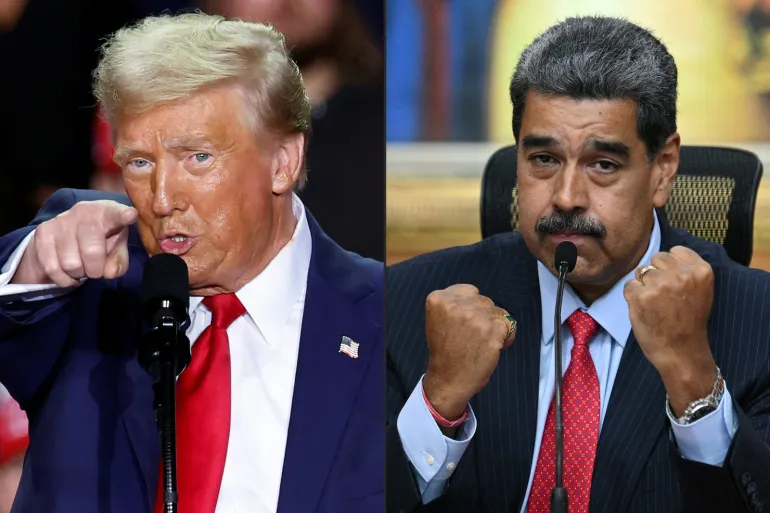
More broadly, Greene argues that Washington’s hostility toward Venezuelan President Nicolás Maduro is driven less by narcotics enforcement and more by strategic and economic interests, particularly Venezuela’s vast oil reserves.
That claim aligns with long-standing critiques from both the left and right that U.S. regime-change efforts are often tied to resource security rather than humanitarian or public safety concerns.
Her remarks also touch on a sensitive issue in international relations: the perception of double standards. Greene has questioned why U.S. military interventions are often framed as legitimate or necessary, while similar actions by Russia in Ukraine or China toward Taiwan are universally condemned.
Though she has stated she does not support either Russia or China, the critique reflects a growing discomfort among voters with what they see as inconsistent moral framing in global conflicts.
Domestically, Greene situates foreign policy frustration within a broader economic context. Rising costs of living, housing shortages, healthcare expenses, and recurring reports of government waste have intensified public anger over U.S. spending priorities.
For many voters, the combination of domestic hardship and sustained funding for foreign wars has reinforced distrust in Washington.
This sentiment is not confined to one party. While Greene directs much of her criticism at Democratic leadership, she also faults Republicans, including past administrations, for maintaining what she describes as a permanent war economy.
That critique resonates with parts of the MAGA movement that expected a decisive break from interventionist foreign policy.
Perhaps most significant is Greene’s generational argument. She suggests that younger voters, along with a substantial portion of Generation X, are far less receptive to traditional national security narratives than older Americans.
Polling in recent years has shown rising skepticism of foreign military interventions among younger voters, alongside stronger support for domestic economic priorities.
Whether Greene’s framing gains broader traction within Congress remains uncertain. But her remarks underscore a real and growing divide in American politics: between an established bipartisan consensus that views U.S. global military engagement as essential, and a populist bloc increasingly focused on domestic costs, border security, and economic nationalism.
As the fentanyl crisis continues and foreign conflicts multiply, that divide is likely to become harder for both parties to ignore.