



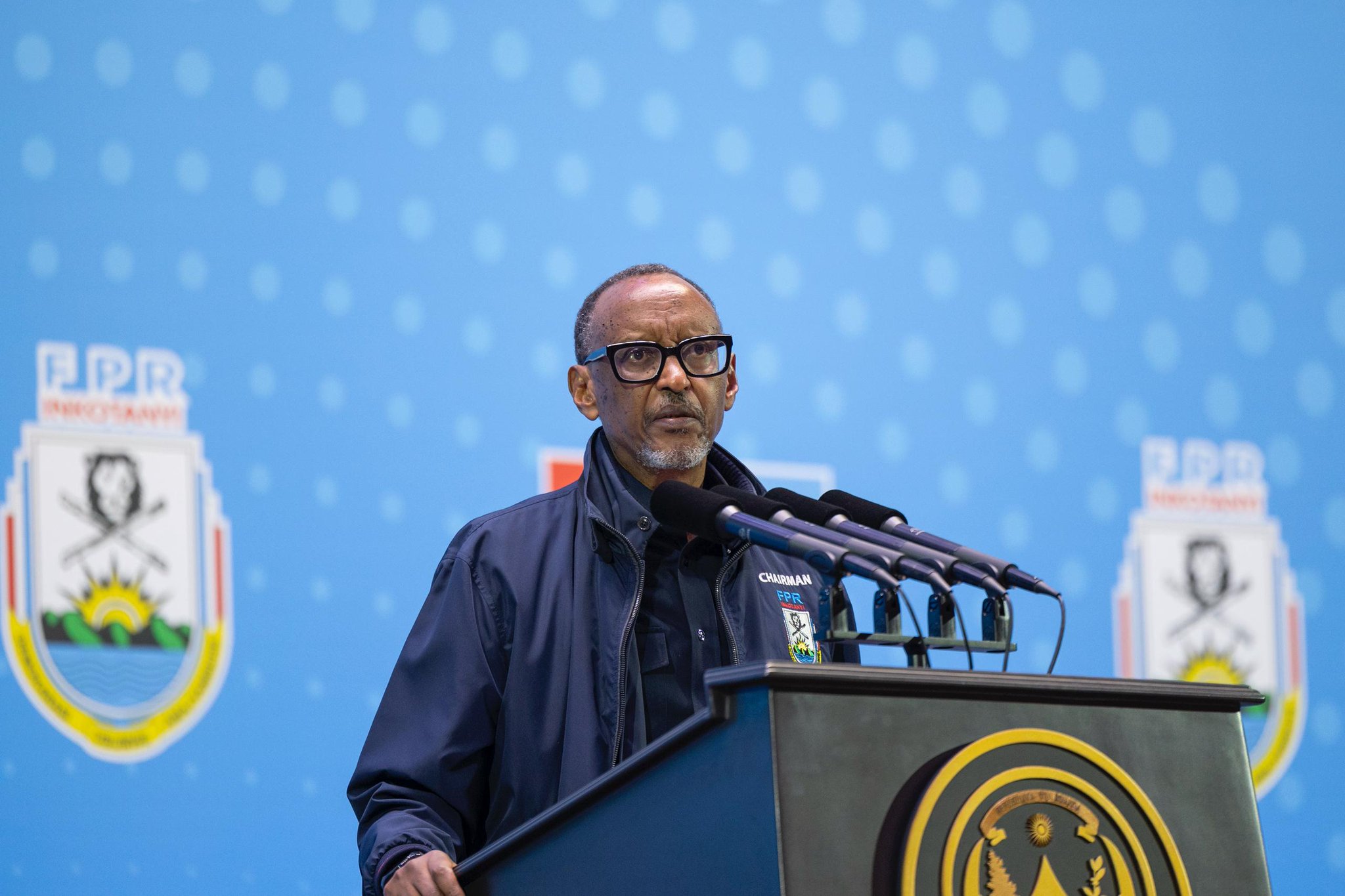
Good morning to you all. I am pleased that we have found the time, all of us gathered here, to hold this Congress of the RPF.
Meetings of this kind, which are held regularly, are important because each one strengthens our organization while also contributing to the building of our country.
For me, such a meeting is a moment of self-examination. It is a time to reflect on our responsibilities, on how we are addressing the challenges that exist within our organization, within our country, and even at the global level—because we are affected by these challenges, both by how we respond to them and by how we should respond in order to continue progressing. I hope that what we discuss here does not simply pass through one ear and out the other, leaving us unchanged. Instead, it should remain with us and be used to build and rebuild ourselves.
This moment should also be used to listen to one another, to hear each other out, to think deeply, and to speak openly about what is in our hearts and how we understand things. Everyone should contribute ideas as they see them and raise questions they believe need answers, especially where matters are unclear. This culture—where some complement others, where some struggle and need support—is the culture we should cultivate within the RPF and in everything we do to build our country.
Each person must think—think independently, think individually—but most importantly, think collectively. That is when thinking becomes meaningful and produces results. We are all here as individuals with personal lives and responsibilities, but the fact that we are here together reminds us that we share many things. In action, that shared responsibility is where unity becomes real. This does not prevent individual thinking, but it requires us to act together when it comes to matters that concern our country and all Rwandans who live in it.
Let me return to self-examination by reflecting on how the RPF has endured over many years. Many of you present here have lived through this history. The RPF has changed over time, and it must continue to change, just as the world itself changes. Failure to adapt to change can destroy any organization. However, while change is necessary, not everything changes. What does not change is who we are and what we stand for—our values, our principles, and our vision of how we should live and govern.
In governance and politics, there are sound principles that must never change. Let me speak specifically about governance. There are practices rooted in our history, in our words, and in our actions. The RPF clearly stated that we must fight corruption. That commitment does not change.
The fight against corruption does not change simply because 38 years have passed, or because someone thinks we have reached a stage where corruption should be tolerated. What changes is not the fight itself, but the methods used to fight corruption.
Change is necessary, but it must align with our core objectives. At times, we may not fully understand one another or agree completely, but within an organization like this, there must be mechanisms to address differences and find solutions.
Over time—five years, ten years, twenty years—some people struggle to align with RPF principles and eventually fall away. That has happened and will continue to happen. The RPF must continue moving forward as it should, even as it evolves.
Many young people are present here today. Many were not even born when the RPF was founded and when the struggle to liberate this country took place. Yet today they hold responsibilities at various levels—some as leaders, others aspiring to leadership. These young people look to us, the older generation, for guidance. They observe how we behave, how we lead, and how we uphold values. If our conduct is flawed, how many of them will survive morally and ethically? Where will they learn to lead when their time comes?
Our responsibility is therefore serious. Meetings like this are not merely about exchanging greetings and returning home unchanged. They must be moments of deep reflection—about what we must do together, the responsibilities we carry, and what the people expect from us.
There are times when citizens raise demands, when they ask for what is rightfully theirs. We should not wait for people to beg us. If citizens must struggle to obtain what they are owed, then we have failed in our responsibilities. That is how the RPF itself began—by demanding rights and dignity.
When leaders neglect their duties, people lose trust. This is what happened in places such as Kayonza, where leadership failed to address the needs of the population. Officials were not hungry, but the people were. Leaders were preoccupied with internal conflicts and personal interests while citizens suffered from hunger and drought. Decisions were delayed, responsibility was avoided, and accountability came too late.
The same applies to infrastructure failures, such as roads that collapse and are left unrepaired for years. Ministries fail to prioritize properly despite having the resources. Apologies are repeated year after year, yet the same mistakes continue. That is not governance. Priorities are national, not personal.
Leadership is not about traveling endlessly to conferences under the banner of “best practices” while neglecting responsibilities at home. Before any official travels, leaders should explain what value those trips will bring to Rwandans. Otherwise, such travel becomes an excuse for absence and disengagement.
Corruption is visible in everyday services—electricity that suddenly becomes available only after money changes hands, computers that are said to be broken until someone pays. These things are known. Leaders see them. Ignoring them is complicity.
We cannot preach values that we do not practice. Cadres cannot ask for ideological training while engaging in corruption. Principles are not slogans; they are behaviors.
Despite all these challenges, we must also acknowledge the progress made. Over the past 30 years, Rwanda has achieved a great deal. The country has grown, the economy has expanded, and stability has been maintained despite a difficult regional and global environment. Our security institutions—the Rwanda Defence Force, the Rwanda National Police, and others—deserve recognition for their service.
Above all, Rwandans themselves deserve gratitude. Despite a history of division and genocide, and despite ongoing external attempts to destabilize and divide them, Rwandans have remained united. They have refused manipulation. That is our greatest strength.
Leaders must respect this people. Failing them is a grave moral error. We are fortunate to lead a population that is resilient, disciplined, and committed to the nation.
I thank members of other political organizations who are present and who work with us to preserve unity and prevent division among Rwandans.
Change is necessary, but it must be guided by our core values. The RPF must constantly remind itself of what it stands for. We must correct mistakes, strengthen our structures, reinforce discipline, and adapt wisely—without abandoning who we are.
Let me conclude by thanking you and wishing you a Merry Christmas and a Happy New Year. Thank you very much.