





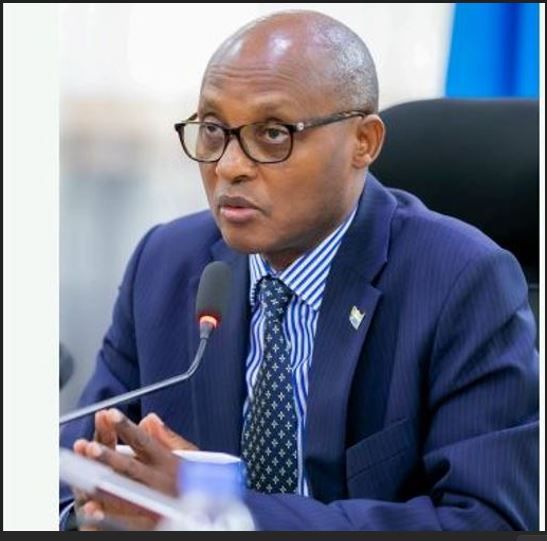
Dr. Mark Cyubahiro Bagabe’s dismissal as Rwanda’s Minister of Agriculture has drawn renewed scrutiny after documents emerged showing he endorsed a restructuring plan that would eliminate existing seed institutions and replace them with a new umbrella organization he helped promote.
According to an official letter dated November 18, 2025, and signed by Bagabe, the Ministry of Agriculture formally endorsed the Seed Traders Association of Rwanda (STAR) as the country’s unified national seed organization.
The letter recommends dissolving the National Seed Association of Rwanda (NSAR) and the National Seed Consortium (NSC), both of which had long operated within the sector. Bagabe argued the coexistence of NSAR and NSC had caused “fragmentation” and claimed consultations with stakeholders supported consolidating the institutions into STAR, which held its first General Assembly in October 2025.
Members of NSAR, however, contested the move, arguing that the association—founded in 2015—was functioning effectively and playing a key role in Rwanda’s progress toward seed self-sufficiency. Several sector insiders said they viewed the restructuring effort as abrupt and unnecessary, raising concerns that it could destabilize a system the country has spent years strengthening.
The seed sector has for years been dogged by internal scandals and entrenched mafia-style maneuvering, making Bagabe’s disruptive restructuring move one he was reportedly unlikely to survive politically.
Some sources allege the initiative may also be tied to questions surrounding the use of funds intended for seed multiplication, an issue investigators are now examining.
The controversy comes as Rwanda is undertaking significant investments to secure its seed supply and improve agricultural productivity.
In the 2024/2025 fiscal year, the government allocated about Rwf 10.6 billion toward seed subsidies—mainly maize, wheat, and soybean—within a larger Rwf 54.2 billion budget for seeds and fertilizers. The aim is to expand local production, reduce imports, and ensure farmers have access to certified seeds at affordable prices.
Development partners have also played a major role. Since 2018, AGRA has invested about US$10.8 million to strengthen Rwanda’s seed system, supporting research, private-sector engagement, and farmer access to improved varieties.
In 2023, AGRA launched a new US$50 million strategy intended to boost national output and position Rwanda as a future seed exporter. Meanwhile, RAB continues to invest roughly Rwf 1.3 billion annually in developing high-yield, disease-resistant varieties.
These combined efforts enabled Rwanda to achieve self-sufficiency in seeds for major crops by 2022.
Under the PSTA5 strategy, the country aims to increase the share of farmers using certified seeds from about 40 percent today to at least 50 percent by 2027.
Against that backdrop, the institutional reshuffle pushed by Bagabe raised questions not only about governance but also about the potential impact on a strategically important sector.
His letter was widely circulated to national and international bodies, including RAB, RICA, the Private Sector Federation, and global organizations such as OECD, ISTA, and AFSTA.
The Office of the Prime Minister announced on December 1 that Bagabe had been replaced by Dr. Telesphore Ndabamenye. His senior advisor was also relieved of duty. The handover is scheduled for December 8.
NSAR and other stakeholders have said little publicly, but officials familiar with the matter expect further disclosures as investigations continue into the restructuring effort and the financial decisions surrounding it.