





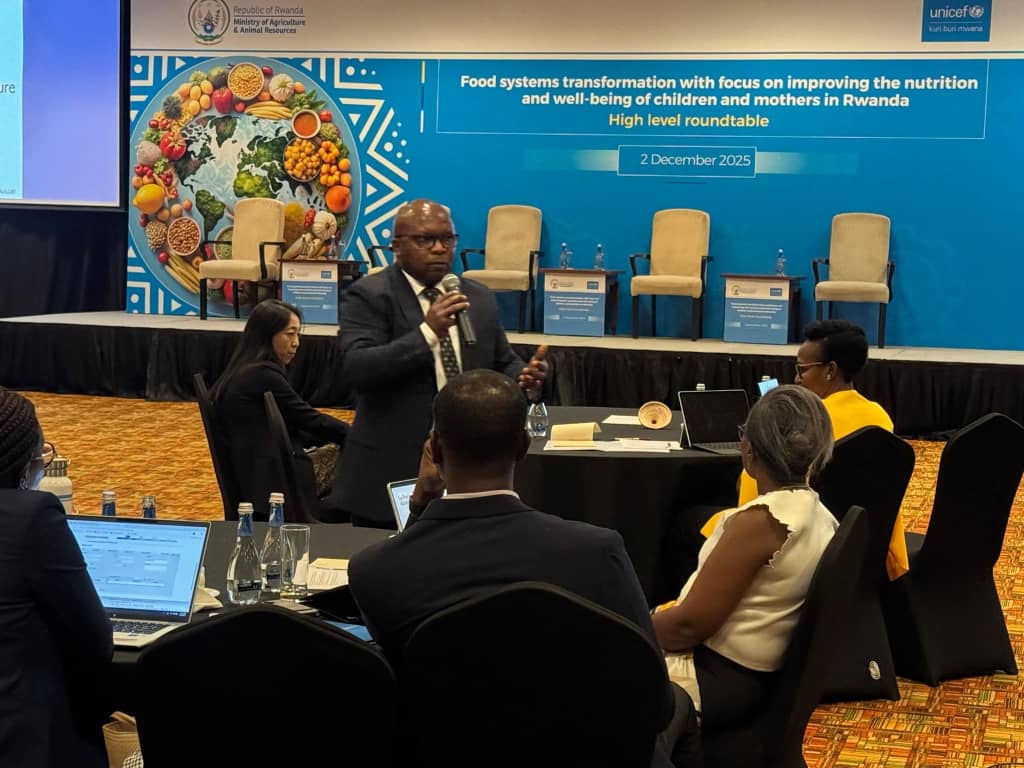
The Ministry of Agriculture and Animal Resources (MINAGRI), in partnership with UNICEF Rwanda and a broad coalition of development organizations, convened stakeholders in Kigali for a high-level dialogue on fast-tracking food and nutrition reforms aimed at combating malnutrition and safeguarding the health of mothers and children.
The meeting brought together senior officials including the Minister of Agriculture and Animal Resources, Dr. Telesphore Ndabamenye, the State Minister Dr. Solange Uwituze, and the Director General of the National Child Development Agency (NCDA), Assumpta Ingabire.
Representatives of international organizations working in child and maternal health were also in attendance, demonstrating the multisectoral commitment needed to address nutrition challenges.
A Persistent National Challenge
Despite Rwanda’s notable progress in reducing poverty and improving public health over the past decade, malnutrition remains a pressing concern, particularly among children under five and pregnant or breastfeeding women.
Inadequate nutrition has long-term consequences, including stunting, severe wasting, and deficiencies in essential micronutrients—conditions that undermine children’s growth, cognitive development, and long-term productivity.
These challenges not only harm individuals but also constrain the nation’s socio-economic development.
Statistics That Demand Urgent Action
National data from 2020 show that stunting stood at 33%, a decline from 38% in 2015, reflecting progress yet highlighting the need for more decisive action.
Rwanda’s government has set an ambitious target: reducing stunting to 15% within the next five years.
This target underscores the urgency of coordinated interventions, evidence-based policies, and stronger community-level engagement to ensure that all children get the nutrition they need for a healthy start in life.
A Collaborative Path Forward
During the dialogue, participants examined the structural issues behind poor nutrition—including limited dietary diversity, food insecurity, and gaps in maternal health services—and discussed reforms that could drive rapid improvement.
Stakeholders emphasized the importance of integrating agriculture, health, education, and social protection initiatives to create sustainable solutions.
MINAGRI and UNICEF highlighted the critical role of nutrition-sensitive agriculture, improved food systems, and strengthened service delivery in communities.
The discussions also focused on building stronger partnerships with international organizations, leveraging innovation, and expanding programs that directly support vulnerable families.
The conference reaffirmed Rwanda’s commitment to ensuring that every child grows, thrives, and reaches their full potential.
By strengthening food and nutrition policies and mobilizing partners, the country aims to accelerate progress toward a healthier and more resilient future.