





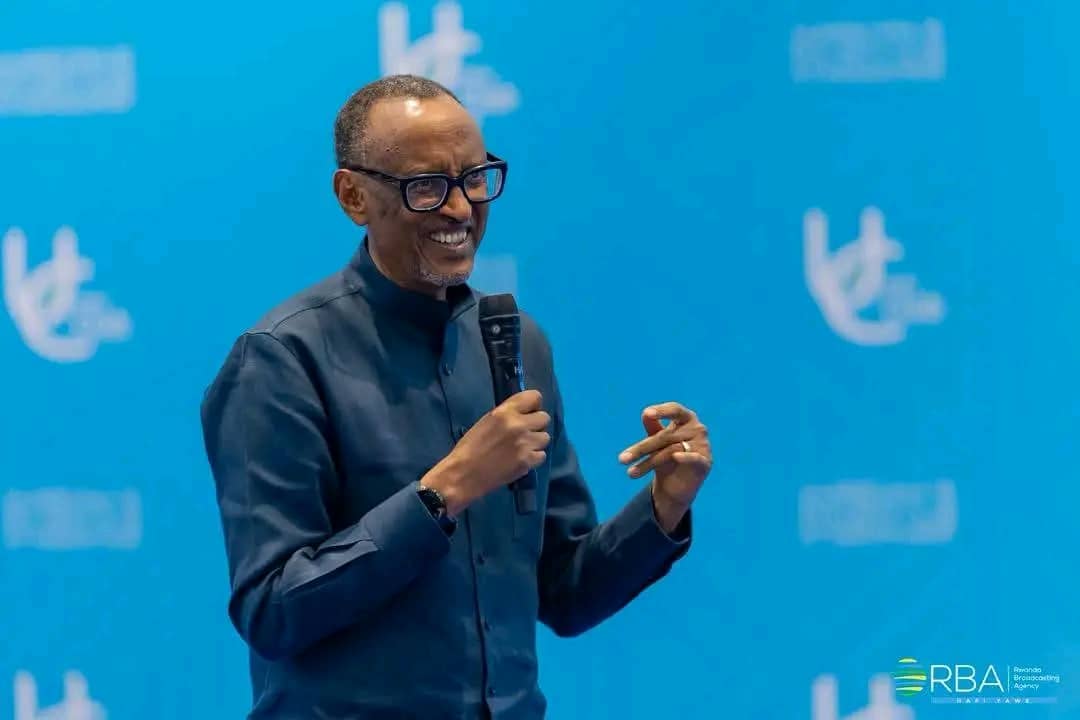
At the 18th Unity Club gathering, President Paul Kagame asked a question Africa avoids: Why is Africa still behind?
It is not just political; it is moral and intellectual. Fifty years ago, many Asian nations were as poor as Africa. Today, they innovate, manufacture, and compete globally. Meanwhile, we import basics, cling to excuses, and reward mediocrity. Why?
The deeper truth is uncomfortable. We punish excellence and reward mediocrity. Intellectuals who expose failure are silenced. Honest criticism is treated as rebellion. Builders are mocked. Thieves are celebrated. Courage has become a liability; integrity a burden.
Africa struggles to understand itself. A Tanzanian sees a Kenyan as an enemy. A Congolese sees a Rwandan as a threat. A Rwandan mistrusts a Burundian. Domestically, the same sickness persists.
Competence is devalued; superficial markers of success; tribe, wealth, travel, houses, social prestige , are elevated. Not that possessions are wrong, but how they are acquired and serve society is the issue. Success should strengthen systems, not exploit them.
Those controlling resources; policymakers, administrators, bankers, often act as gatekeepers. They refuse to fund local projects or innovative ideas, arguing risk, while foreign firms are welcomed without question. Creativity and entrepreneurship are stifled; caution masquerades as prudence.
Our political culture is no better. Leaders behave like small gods; demanding loyalty instead of serving. They boast of wealth and power, not of citizens improved. Public officials earning modest salaries flaunt mansions impossible to earn honestly. Basically greed is admired, and is integrity punished.
Even academia is silent. Why do Harvard, Oxford, and Cambridge invest in African research, while local universities cannot study whether taxing farmers or charging high interest truly serves citizens? Without such inquiry, policy is blind, and progress stalled.
We must also confront the global system. Invisible chains bind us: multilateral institutions lend with one hand and constrain with the other. Loans often perpetuate dependency, not autonomy. Africa must act, but the world was never designed for our rise.
Our social fabric is frayed. Rivalry, envy, and pettiness dominate. Instead of collaboration, we chase status symbols and fail to reinvest in ecosystems that lift all. Vision 2020 had clarity, ownership, and energy. Vision 2050 risks losing that zeal. Without renewed commitment, mediocrity will persist.
Even the youth are not spared. Comfort over courage, status over substance, appearance over achievement; the same mistakes repeat. Moral and intellectual decay is self-perpetuating.
Kagame’s question persists because we refuse to answer honestly. It is not aid or outsiders that hold us back. It is us; our greed, fear, and lack of moral courage; compounded by social and structural barriers that exploit our weaknesses.
Africa’s renaissance will not come from slogans or summits. It will come when integrity is rewarded, power becomes service, bright ideas are funded, and success is measured by how many others rise with you.
Until then, Kagame’s question remains not just a reflection, but an indictment; a mirror of what we have become and what we must change.