
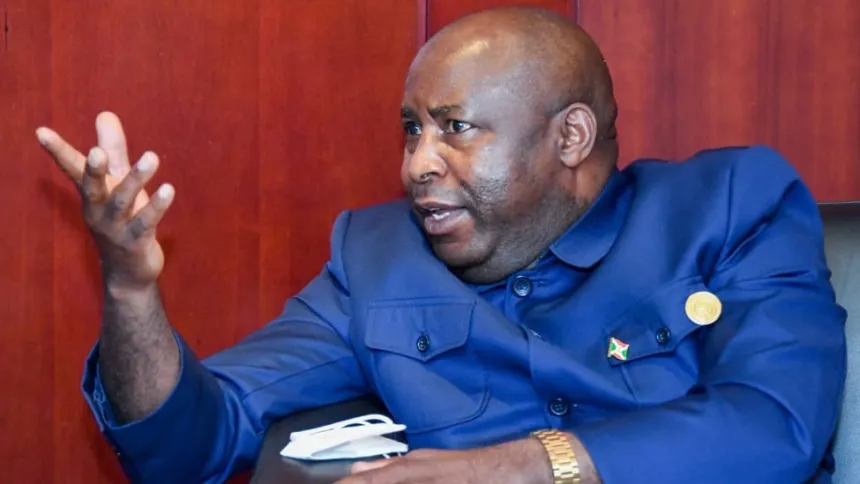
Fuel traders in Burundi have refuted recent claims by President Évariste Ndayishimiye that the country has sufficient fuel supplies, accusing the state petroleum company of failing to deliver despite their repeated requests and full prepayments.
While addressing residents in Bugendana Commune, Gitega Province, President Ndayishimiye said there was enough fuel in the country and blamed fuel station owners for allegedly refusing to collect it from storage depots.
However, station owners insist the fuel is simply unavailable.
One dealer told Burundi Iwacu that he has been waiting for three months for a delivery from SOPEBU (Société Pétrolière du Burundi), the national petroleum company, but has yet to receive any supply.
“Even if fuel exists, getting it is extremely difficult because of the shortages,” he said, directly contradicting the president’s assertion of abundance.
He added that in the past three months, SOPEBU had delivered only 25,000 liters out of the 30,000 liters he had fully paid for in advance. “Sometimes they give you just 5,000 liters, and then you wait weeks or even months without another delivery,” he lamented.
Rejecting the president’s accusation that traders are hoarding or unwilling to buy fuel, the dealer said, “We built fuel stations to do business and make a profit. It’s unreasonable to claim we refuse to stock fuel when that’s our livelihood.”
Visibly frustrated, he said he was considering demolishing his station and replacing it with a small retail shop. “At least a shop could bring in some income,” he said.
He urged the government to increase import volumes instead of blaming traders, arguing that if fuel were truly available, every dealer would buy it—especially since a greater supply would lower prices.
President Ndayishimiye, however, maintains that fuel is no longer a problem in Burundi, alleging that station owners are slow to restock and sell to the public.
During his speech in Bugendana, he warned that if the situation persists, the government may seize control of private fuel stations and operate them “in the interest of the people.”
But this threat has drawn criticism from economists and political observers. Jean Ndenzako, a Burundian economist and political analyst, said such a move would amount to government interference in private enterprise and could discourage future investment.
“Taking over private fuel stations would undermine confidence in the private sector and weaken independent entrepreneurship,” he said.
According to Ndenzako, Burundi’s fuel shortages are not caused by private traders but by a lack of foreign currency to import petroleum products.
He noted that by the end of 2023, the country’s foreign reserves were sufficient to pay for only 24 days’ worth of fuel imports.
“When the president speaks like that, he sends a negative message to both domestic and foreign investors,” Ndenzako warned, adding that the remarks could derail Burundi’s Vision 2040–2060 development plan, which aims to transform the country into a stable and prosperous economy.
For now, fuel traders across Burundi say they are waiting to see what action the government will take following the president’s remarks—whether it will address the underlying shortage or tighten control over private business operations.