





In the heart of Rwanda’s capital, Kigali, where the skyline gleams with a promise of growth and innovation, stands a towering monument, Kigali Heights, which was recently sold to YUSSA Ltd.
It’s birth and extraordinary journey was conceived and implemented by two visionary men, Dennis Karera and his partner Micheal Idusso. This towering structure did not provide just a business venture; it became the embodiment of the developers vision, risk, and perseverance.
This story about one of the two men; Dennis Karera, the retired Army and Police officer turned businessman and currently the Vice President of the East African Business Council. It’s a story about his journey from military barracks and police leadership to the business boardrooms. It’s a story about his courage, calculation, and ultimately, his success.
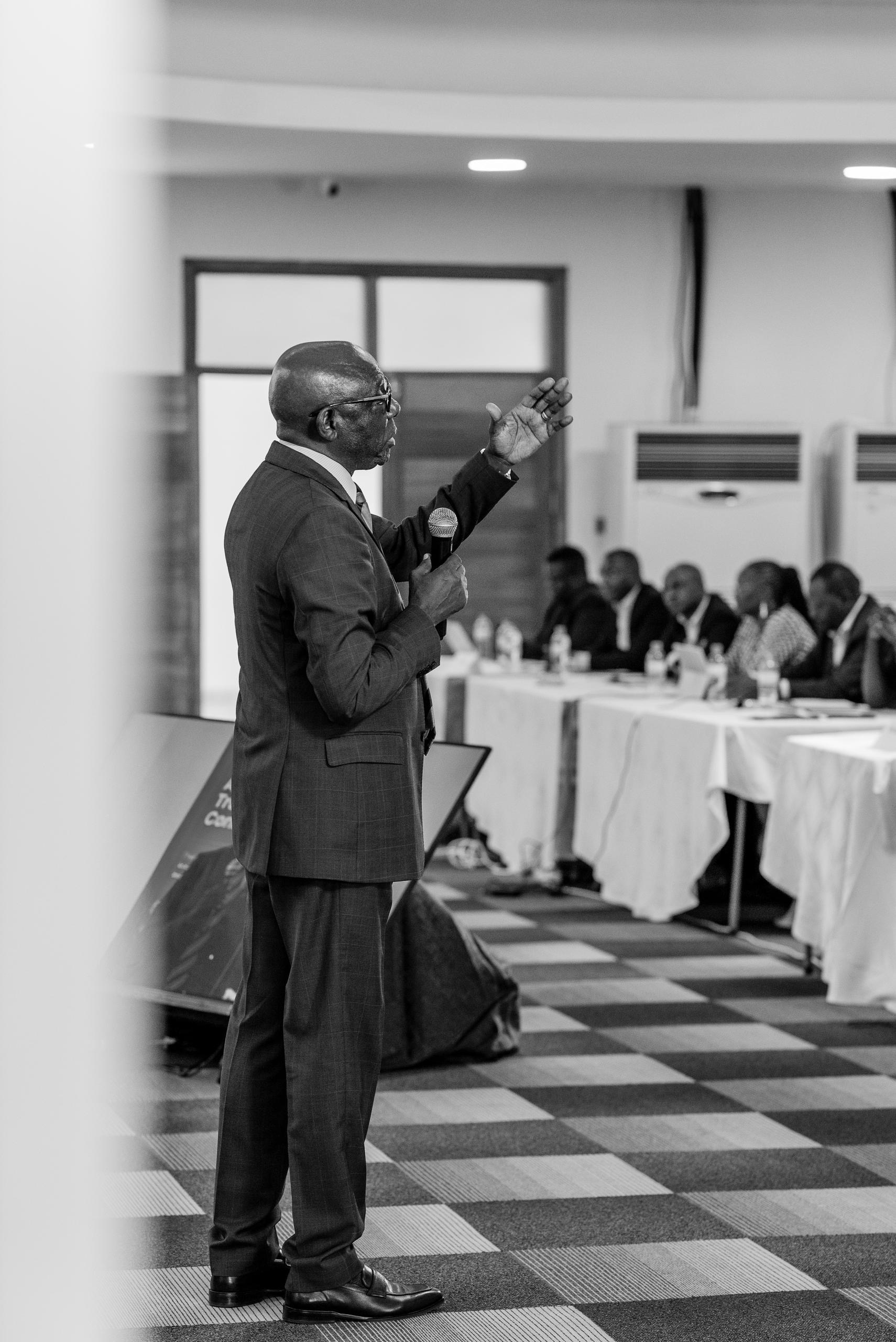
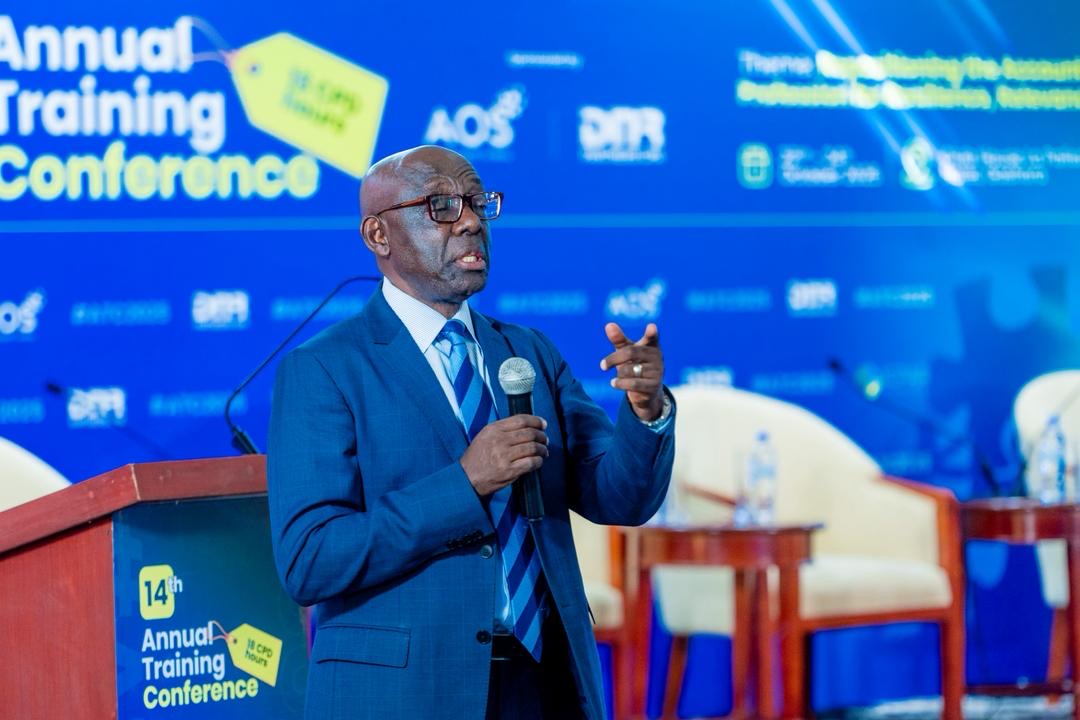
When Karera took the stage at the 14th Annual ICPAR Training Conference at Club House La Palisse, Gashora, on Wednesday, he didn’t simply share business insights; he told a story; one that transcended typical business rhetoric and offered an honest look into the trials, fears, and triumphs that shape true entrepreneurial success.
“From vision to victory is not a destination, but a journey,” Karera said, his voice resonating with authority. “And the journey demands courage, calculation, and relentless pursuit.”
A Vision Devoid of Fear
Karera’s story didn’t begin in a boardroom or in a business meeting; it started long before he donned the suit of a business leader. It began in the military, and later in the Police leadership were rising through the ranks with discipline, strategic thinking, and an unwavering commitment to service. But when he retired, he was faced with a question that many, especially those who choose to becoming entrepreneurs confront: What next?
For someone who had spent decades in public service, the transition to private enterprise wasn’t obvious. The lessons from the military, leadership, resilience, and decisive action, would guide him through. “The hardest battle is always the first step,” Karera recalled.
“Fear was my biggest adversary. Fear of failure, fear of the unknown. That’s the truth we don’t often talk about, but fear holds back even the bravest of us.”
And yet, that very fear was the fuel for his transformation. It became not a hindrance but a challenge to conquer. The moment of clarity came to him not in a conference room but while walking along the River Thames in London. Standing before the grandeur of the British Parliament, Karera asked himself, “Who built this? Was he any different from me?” The answer was simple but profound: No. He was no different. That moment birthed the understanding that if others could do it, so could he.
Finding the Right Business at the Right Time
Now armed with this newfound courage, Karera sought to identify a business venture that was not just profitable but aligned with the needs of his country.
“I looked at Rwanda’s needs,” he said, “and what I saw was a gap. Rwanda’s tourism industry was growing, but the country lacked quality hotels and accommodations to support that growth.”
So, he decided to enter the hospitality business, an industry that seemed both necessary and lucrative.
“Starting, I had only $1 million. But I thought, ‘This is what my country needs. This is where I can make a difference,” he recalls. The initial hotel was small, yet the demand was overwhelming. “Before I knew it, companies like Ericsson and Nokia were calling.”
“They said, ‘We want all your rooms for the next three years,’ and that’s when I knew I had crossed the line from vision to victory.” The validation came quickly, and the early success was a testament to his calculated risk.
Risk, Numbers, and the Power of Strategic Planning
Yet Karera didn’t stop at success; he aimed for something greater. He set his sights on a project that would forever change Kigali’s skyline: Kigali Heights.
The numbers were staggering; $40 million; but the risk was a familiar companion. “$40 million?” Karera reflected. “I won’t lie, that number terrified me. But fear is what makes the challenge worth it. If it’s not terrifying, then you’re probably not aiming high enough.”
With the lessons of the military still fresh in his mind, Karera turned to strategy. The vision was clear, but the path required careful planning and collaboration. “Business, just like warfare, is won by precision and by trusting the plan,” he said.
“I broke down every aspect of the project; design, cost, and feasibility. It took months, but it was worth it.” He knew that the foundation of success was in the numbers, which provided the clarity to move forward.
Remember he was in the room full of seasoned accountants, auditors and CFOs. As he told his story; the numbers crushers keenly listened. He proceeded. “Numbers don’t lie,” Karera remarked with a smile. “They strip away emotion and tell you what’s real.”
But numbers alone wouldn’t suffice. Karera also remembers that he had to consider the power of right partnerships. He spent months seeking out partners who shared his vision; people who would not just bring capital but align with his values. “You cannot underestimate the importance of finding the right people,” he said.
“Your partners are the ones who will either lift you or pull you down. The numbers can be right, but the wrong partner can break everything.”
The result of this meticulous planning was Kigali Heights, a structure that quickly became a landmark. “The moment we opened, it was 100% occupied,” Karera said. “And today, Kigali Heights isn’t just a business; it’s an economic hub, creating jobs, supporting local suppliers, and boosting the national economy.”


Overcoming Fear: The Final Frontier
As Karera wrapped up his keynote, he returned to: fear. “Fear is the monster that holds most people back. Fear to invest, fear to try, fear of failure. And the truth is, even the most successful among us still face it. But the key is to face it head-on.”
For Karera, overcoming fear was a matter of perspective. “You’ll never get rid of it. Fear is always there, whispering. But you have to act anyway,” he shared. “It’s the difference between staying where you are and pushing through to something better. The choice is yours.”
He reflected on his early days when even a small step felt daunting. “When I first started, I wasn’t sure if I could do it. But I kept asking myself: ‘What’s the worst that can happen?’ I wasn’t afraid of failing; I was afraid of not trying at all.” He went for it, and the rest is history.
The Ripple Effect: A Legacy of Transformation
The impact of Karera’s ventures has rippled far beyond his own success. Kigali Heights is more than just a building; it’s an entire ecosystem. “Thousands of people are employed directly or indirectly by this project,” Karera said. “Suppliers, shop owners, service providers, all benefiting from the business.” What began as a $1 million investment grew into a $40 million triumph, creating a wave of opportunities that transformed an entire section of Kigali.
Karera’s journey serves as a testament to the power of vision, planning, and above all, overcoming fear. “When we started, we were two people with a dream.
Today, that dream has brought thousands of people along for the ride,” he reflected, his eyes gleaming with pride. “This is what happens when you move from vision to victory. It’s not just about you: it’s about everyone you lift along the way.”
A Vision Fulfilled, a Victory Earned
Indeed, Karera’s story is one of remarkable growth, but it’s also a story of the human side of entrepreneurship; of doubts, fears, and the inner battles that often go unnoticed. His journey reminds us that business, like any great endeavour, is not just about achieving goals: it’s about conquering the fears that stand between us and our potential.
“From soldier to business mogul, from a dream to a landmark project,” Karera said, smiling at the audience. “The journey is never easy, but it’s always worth it. The key is not to let fear hold you back. Trust the numbers, trust the process, and most importantly, trust yourself.”
In the end, Karera’s journey proves that victory is not a final destination; it’s the culmination of every risk, every decision, and every moment you choose to move forward despite the fear.