





It has taken me years to truly see what has quietly unfolded in Rwanda. I walk through Kigali; travel across the hills; meet people from every corner of this country; and take the calm, civility, and order for granted.
I would think it is natural; as though Rwanda had simply moved on. Wapi, it’s engineering of a society at its best.
But recently, it struck me with clarity; what has happened here is not ordinary. It is the result of deliberate design; a profound reconstruction of society that has redefined what it means to be Rwandan.
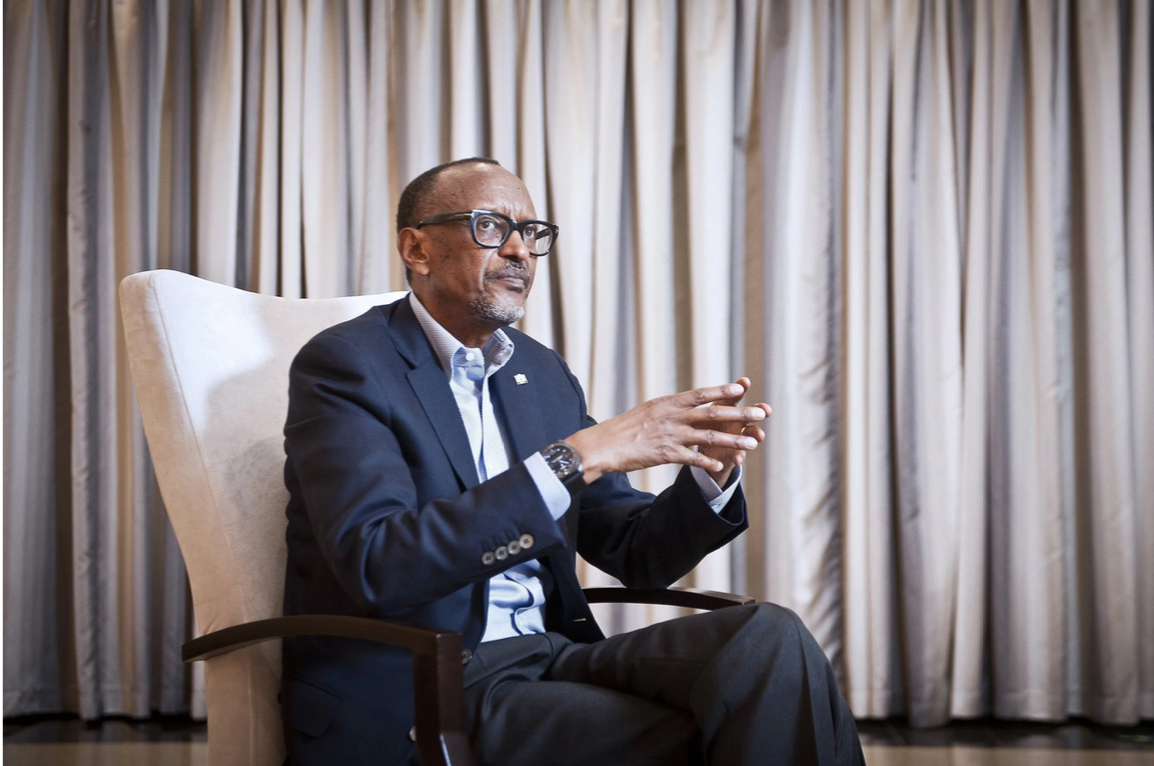
At the center of it all stands President Paul Kagame; not only as a political leader but as one of the most sophisticated social architects of our era. Aratekinika! N’umutaramu.
We all know that when Kagame and the Rwandan Patriotic Front stopped the genocide in 1994, the damage left behind was not only physical; it was psychological, moral, and spiritual. The country was poisoned. Genocide ideology had sunk so deeply into the national psyche that even language and kinship were suspect. The ingredients of that tragedy were invisible divisions; regional loyalties, clan identities, refugee labels, and ethnic categorization.
These were the viruses and Trojan horses that infected our nation, turning neighbors into enemies and difference into death.
Here is the thing: most nations rebuild infrastructure after war; Kagame chose to both infrastructure and rebuild conscience. He didn’t rely on speeches or slogans; he created systems, laws, and institutions that silently reshaped thought, behavior, and relationships. You recklessly mouth can cost you seven years in prison. And indeed your recklessness can cost us a nation in a blink of an eye. So, 50/50, better to muzzle it.
The 2018 Law on the Crime of Genocide Ideology and Related Crimes stands as one cornerstone of this transformation. It banned ethnic classification not to erase history, but to ensure it could never again be weaponized. By making it illegal to publicly identify someone as Hutu, Tutsi, or Twa, Kagame targeted the very root of the politics that once destroyed Rwanda. It was firm yet measured; dismantling the machinery of division while preserving the truth of history.
The genius of this social transformation lies in its quietness. Laws against divisive language, civic programs like Ndi Umunyarwanda and Itorero, and the discipline that now defines everyday life have become so normal that few recognize how radical they once were. Step by step, Rwanda’s social DNA was rewritten.
But Kagame has not achieved this easily. The journey has been hard and often lonely. He has been bruised both domestically and internationally; called authoritarian and high-handed; accused of control rather than care. Yet he ignored the noise and soldiered on; consistently, determinedly, with an unshakable sense of purpose.
Today, it is irrelevant to mention ancestral regions or clans; whether Abanyabutare, Abanyagisaka, Bakiga, Banyacyangugu, Abagesera, Abagogwe, Abega, Banyiginya, or Abashambo. Equally irrelevant are refugee origins once used as social markers; Abagande, Abadubai, Abatanzania, or those born in camps once known as Abasope. These labels were once instruments of exclusion, subtle hierarchies that fractured the nation. They were ingredients in the tragedy we endured.
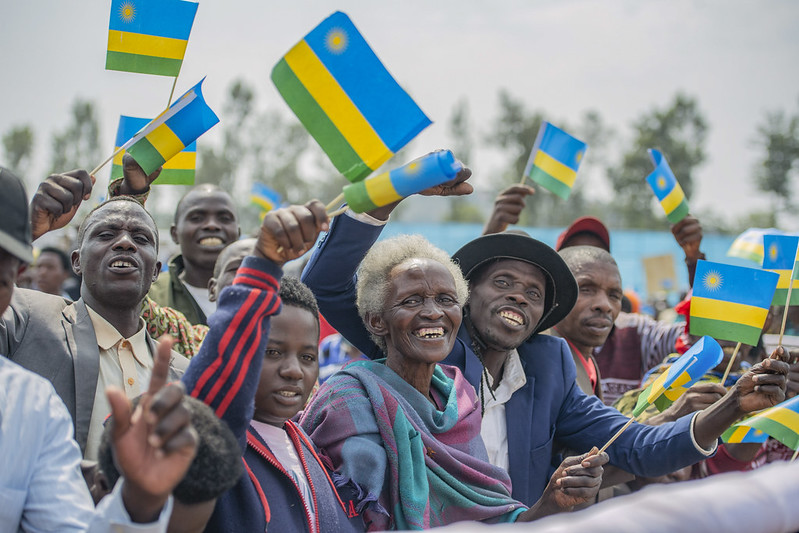
The new Rwanda dissolved them into one unifying identity; Umunyarwanda. What matters now is not ancestry but contribution. People identify by profession and purpose; teacher, doctor, farmer, entrepreneur, artist, mother, father; not by lineage.
In schools, no one asks where you come from. In hospitals, no form inquires about ethnicity. In banks or public offices, one’s background is irrelevant. Services are digital, systems are impartial, and prejudice has nowhere to hide. Even if someone secretly clings to old ideological instincts, the structure itself leaves no space for discrimination.
Now, one’s nose, height, or general morphology doesn’t matter anymore. The physical traits once used to divide or classify people have lost meaning. Anyone can start a business anywhere in the country; anyone can buy land or build a home in any district without fear of bias. Government tenders are awarded through transparent, automated systems where valuation happens in open spaces by committees, not in dark corners of favoritism.
Today, merit is the measure. Hard work speaks louder than connections. You don’t have to be related to someone powerful to succeed. While pockets of corruption or nepotism still appear here and there, they are rare, and those who try it know it is punishable. Ibya uzi icyo ndicyo don’t count anymore. I love it!
By the way, even naming traditions have evolved. Parents no longer give children names like Sagahutu, Mbarimombazi, or Mwenegatutsi; names that once carried ideological weight. And even if they do, the law allows children to legally change their names, reclaiming their individuality and dignity.
Hari n’akandi. Scholarships, too, tell the story of transformation. They are awarded purely on merit; to those who perform best or meet clear criteria; not because of who they are or where they come from. The university of Rwanda had graduated less than 3000 students since its inception by 1994. Tragic.
Now, President Kagame himself runs a scholarship program for students with exceptional academic records or those from underprivileged backgrounds; ensuring that opportunity reaches talent wherever it exists. Some beneficiaries include children of FDLR and genocide perpetrators. 
Frankly, the society has now outgrown division. In bars, people share laughter; in families, intermarriage is common; in daily life, trust feels natural. Beneath this normalcy lies a web of laws and values that keep peace intact. Those found guilty of spreading hate are punished; not to silence opinion, but to protect the fragile harmony rebuilt from ashes.
Yet one must ask; do we, as a people, recognize this transformation? Do we understand that the reshuffling of behaviors; however intrusive it may seem; has been our greatest remedy? Have we noticed how thoroughly it has redefined who we are and how we live?
Some outsiders misread Rwanda’s unity as overregulation. Intrusive, excessive government control. They see order and discipline and assume control. But they overlook the truth; that after genocide, unrestrained freedom was not freedom at all; it was danger. Kagame grasped this early. He understood that survival demanded both liberty and restraint; openness and structure. He built a peace that is not accidental, but deliberate; embedded in law, culture, and the etiquette of daily life.
Still, remnants of the old poison persist; mostly beyond our borders. A large number of Rwandans living abroad, many descended from those who once carried the banners of PARMEHUTU and CDR, still harbor divisive attitudes and primitive beliefs. They spread hatred and divisionism under the guise of free speech, often on platforms that amplify ignorance and resentment.
The irony is painful; in those countries, it is illegal to incite hatred or to glorify genocide, yet they are allowed to do it because it is framed as political freedom or freedom of speech. The hypocrisy is staggering. The same ideologies that destroyed Rwanda are tolerated abroad in the name of democracy; and the same societies that claim to defend human rights turn a blind eye to the abuse of truth and dignity.
But inside Rwanda, that ideology has no home. The moral climate has changed. The young, born after 1994, have no use for such divisions. To them, ethnic politics sounds archaic; almost fictional.
That may be Kagame’s quietest victory; not the suppression of hatred but its extinction as a social instinct.
We who live in this peace often forget its price. We complain about ordinary inconveniences; traffic, prices, policies; forgetting that even the freedom to grumble is built on order. Kagame’s genius lies in having made stability so normal that it feels mundane. He engineered peace so well that we mistake it for nature. Rwanda dismantled ethnic politics without erasing history; it replaced inherited identity with civic belonging. Equality has become a daily habit; not a promise.
Yes, the laws are strict. Yes, the system is demanding. But it worked; not to control, but to cure. It flushed out the viruses that once poisoned our collective mind and replaced them with civic discipline and shared dignity.
Paul Kagame’s Rwanda is a place where freedom means living beyond the boundaries of ethnicity; where unity is not preached but practiced; generation after generation.
Have we stopped to ask ourselves what would happen if those guardrails disappeared? Would we still live with such ease; such trust; such calm? Or would the ghosts return?
The Rwanda we inhabit today was not inherited; it was engineered. Every reform, every public service, every act of courtesy forms part of a system that protects equality and decency. There may still be whispers of hate abroad, but here, something irreversible has taken hold; a moral transformation rooted in law, sustained by order, and expressed in dignity.
Yet challenges remain. For all the progress made, values have begun to erode in subtle ways; respect, humility, integrity, and selflessness are fading in corners of our society. It is the next frontier of our national journey; a conversation for another day, but one we cannot postpone.
We may not talk about it often, but history will. And when it does, it will record that Kagame did not simply rebuild a nation; he rewired a people. He turned law into healing; discipline into peace; identity into shared destiny.
That is Rwanda’s quiet revolution; and its enduring genius. I have a few things don’t agree with him, but on this; hands down!