

The world today is addicted to measurement. Numbers. Have you seen that every few months, new reports bloom like seasonal flowers; global competitiveness indices, economic growth charts, democracy rankings, development tables and so on and so forth.
They all promise to reveal how the world truly stands, who is ahead, who is failing, and where hope supposedly lives. We have come to believe that a nation’s destiny can be captured by decimals and data points. Frankly, this is absurd and ridiculously misleading. We are shooting at the wrong targets.
I had a long and candid conversation at an uptown coffee shop with a European diplomat; a wise friend whose thirty years of service have given him the patience of a philosopher; we found ourselves questioning that illusion.
We spoke of the world that exists in numbers, and the world that breathes beyond them. Two different worlds apart. We called it the world of intangibles; the domain of what cannot be counted, yet defines everything that counts.
What is the value of peace, for example? How do you measure dignity? Can discipline be plotted on a chart? What about the quality of food, abundance? Political stability? Communally speaking, the cohesive atmosphere?
Take Rwanda, for example; a country often listed among the world’s poorest. By economic metrics, it sits on among those at the bottom in global rankings.
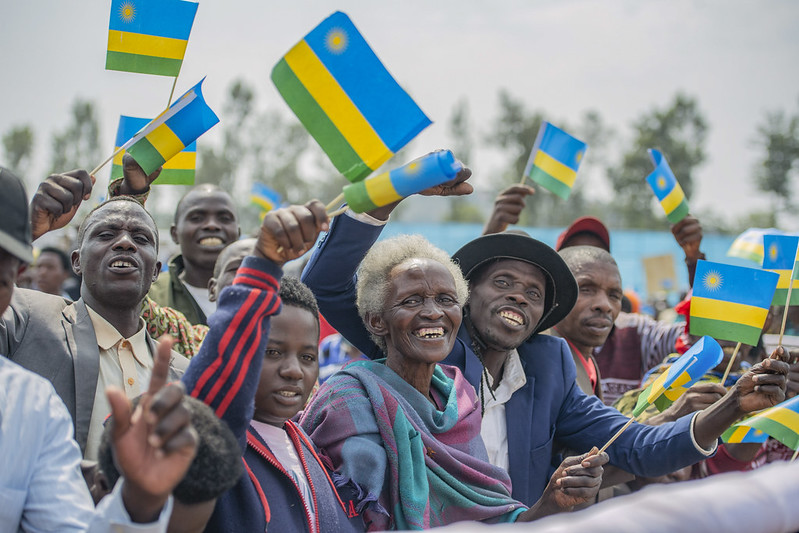
But when you walk through Kigali streets, Musanze, Rubavu, at night, you feel something that no report can express. The streets are calm, lights trace their way to every border, and the air itself seems organized. Crime rate is low; justice is swift.
In these streets, a young woman can walk home at midnight unafraid; a privilege denied to many in the richest capitals on earth; London, Paris, Brussels, Lagos, Johannesburg, Mosco, etc.
The paradox is quiet but profound.
Let’s examine this: Rwanda’s mortality and maternity rates are low; its crime rate almost negligible, and its healthcare coverage exceeds 80%. Yet its citizens do not boast of wealth. Bank accounts are thin, but hearts are full. The village life is envied; people sleep peacefully, laughter echoes under banana groves, and hospitals are not overrun with the chronically ill. It is a society modest in material possession, yet rich in composure and coherence. How, then, does one rate that? I am not saying they have their lives figured. Far from that. I am probing the rankings that don’t capture their peaceful lives by the metrics.
Take for example London, by contrast, dazzles the charts. The economy is vast, the systems efficient. But in that same city, you will not see a young girl walking alone at 2 a.m. The streets are restless, the air heavy with caution. In the numbers, London leads; in the lived reality, it trembles.
Across the Atlantic, the United States towers in GDP, power, and innovation. But this wealth coexists with a peculiar insecurity; the terror of gunfire in schools, the silent trauma of children who learn to hide before they learn to spell. Parents work harder, but sleep less. The wealthiest nation in history is also one of the most anxious.
In Kenya, democracy flourishes, voices are free, and expression is vibrant; yet so many graduates, full of promise, remain jobless for years. In South Korea, 5G signals blanket nearly every inch of land, but millions of brilliant young people drift in quiet despair; overeducated and underemployed.
And then, there is China; the miracle of modern growth, hailed by the world as a symbol of economic triumph. It has lifted hundreds of millions out of poverty and redefined global manufacturing. But what few mention is the quiet corrosion of values.
The China that once revered honesty and honor now bends to the logic of greed. Products are designed to break after a single use; cheap, disposable, and profitable. The world applauds the speed of its ascent, but rarely asks about the soul it may have left behind.
Contrast that with Germany; where precision is not just a technical skill but a moral principle. To build something well is not simply to make it work, but to make it right. The German engineer earns respect not only through invention, but through integrity.
And France; that elegant muse of art and romance; now grapples with unrest and disillusionment. The same streets that once hosted poets and revolutionaries now echo with the noise of protest. The world still imagines Paris through perfume and poetry, yet beneath the glitter lies a quiet ache.
Then, there is the Middle East; a region so rich in history, faith, and civilization, yet so trapped in its own storms.
Israel and its neighbors live in a permanent state of tension; one side boasts of military superiority, the other of ideological purity and resistance. The result is a region engulfed in fear and fatigue. Children grow up counting explosions instead of stars. Ordinary people, mothers and workers, step outside each morning glancing over their shoulders, wondering if peace is a dream too fragile to touch.
That is not life; it is survival disguised as normalcy.
Yet we cannot ignore that economics matters. In the modern world, almost everything has been commercialized, monetized, and priced. Survival itself has become transactional. Productivity is vital; growth is not a luxury, it is a necessity. No country can sustain its peace or social order without economic substance. The question is not whether economics is important, but whether it is sufficient. There are no trade-offs between indicators; what matters are priorities.
The Scandinavian economies understand this better than most. Nations like Norway, Sweden, and Denmark have built robust, productive systems that value both output and equity. They are proof that a country can pursue economic growth without sacrificing social dignity. There, efficiency coexists with empathy, and prosperity does not erode peace. Their balance is not accidental; it is moral and deliberate. They have mastered the art of harmonizing what is measurable with what is meaningful.
My friend, the diplomat, smiled as we exchanged these paradoxes. Perhaps, he said softly, humanity has learned to perfect numbers, but forgotten to understand meaning.
He was right. In Kigali, peace is not a statistic; it is the texture of daily life. The roads are smooth, the rules clear, the nights gentle. But some homes have little food. A child might go to bed hungry in a house surrounded by stability. A nation can have world-class infrastructure and yet humble pockets of need. And still, that nation can be deeply, enviably whole.
Do we often reflect in these dimensions?
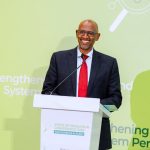
Dr. Donald Kaberuka, the former president of the African Development Bank, this week spoke of vision, clarity of purpose, and determination. Those very words are what one can borrow to define the intangibles; the essence of a nation that is quietly transforming. The These cannot be charted, but they drive real change. They are the unseen foundations upon which visible progress rests.
Perhaps that is the tragedy of our global imagination; we have confused what can be measured with what truly matters. A country can rank high and still be hollow; another can rank low and still be luminous. The world is full of data, but starved of discernment.
When I think of Rwanda; or of any society that values peace above display; I see a new form of wealth emerging, one not captured by GDP or exports. It is the wealth of stillness, order, and collective responsibility. It is the quiet pride of people who live by purpose rather than possession.
Numbers can tell us how fast a nation moves, but not whether it moves wisely. They can tell us how rich it is, but not how just. They can reveal its strength, but never its soul.
As our conversation drew to a close, the diplomat looked at the beautiful sunny afternoon as the wind blew the leaves of tall green palm trees around us and said, almost to himself, the next global index should not be written by economists; it should be written by poets, anthropologists, and those who can see the invisible.
And perhaps that is the way forward; to see nations not as economies, but as living moral beings. To rediscover the courage to value peace over prosperity, dignity over dominance, and purpose over power.
Because when the numbers fade and the charts are forgotten, only one truth remains; the measure of a nation is not in how much it has, but in who it has become.
That, the unmeasured soul of nations, is where civilization truly lives.