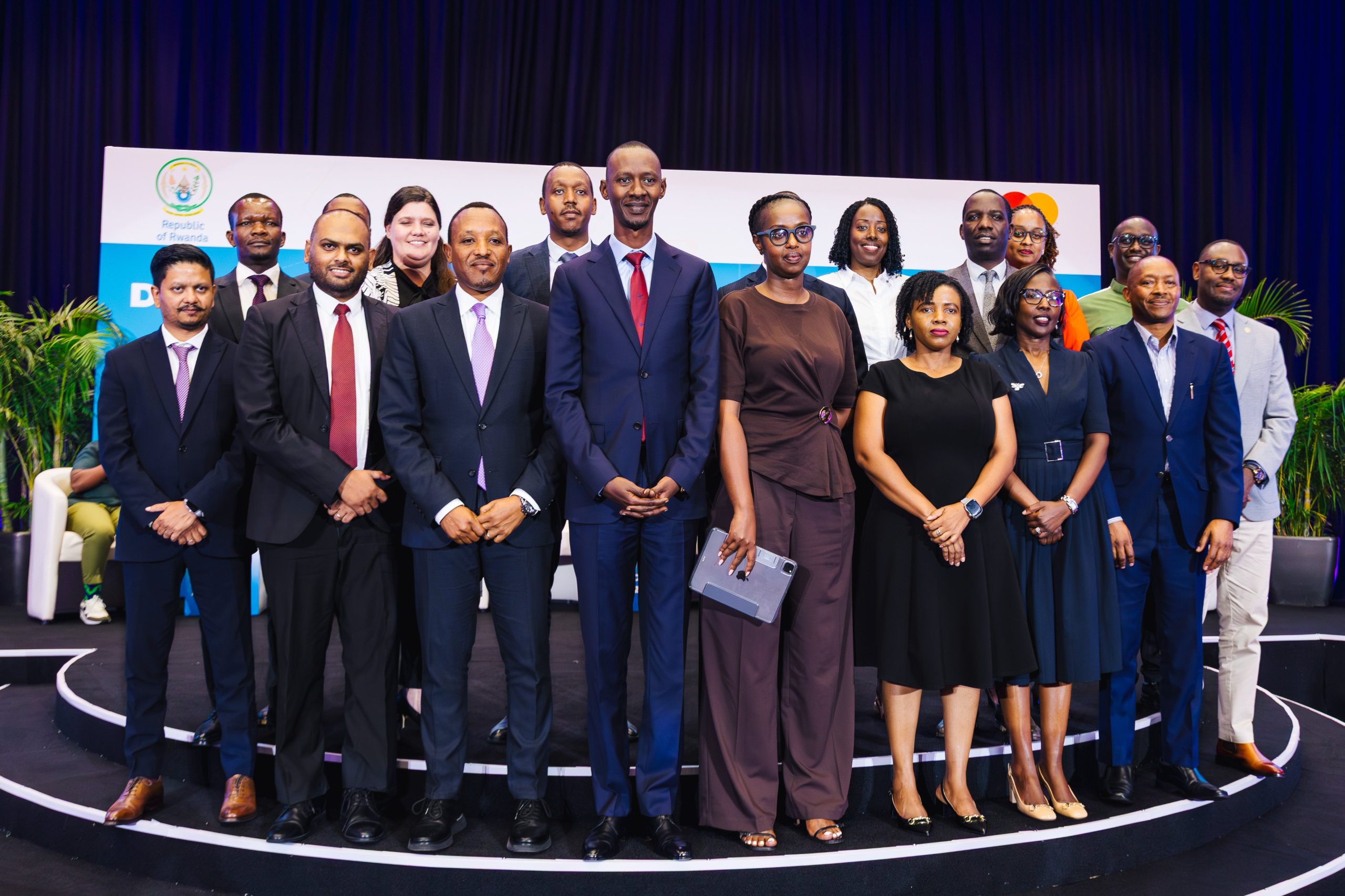






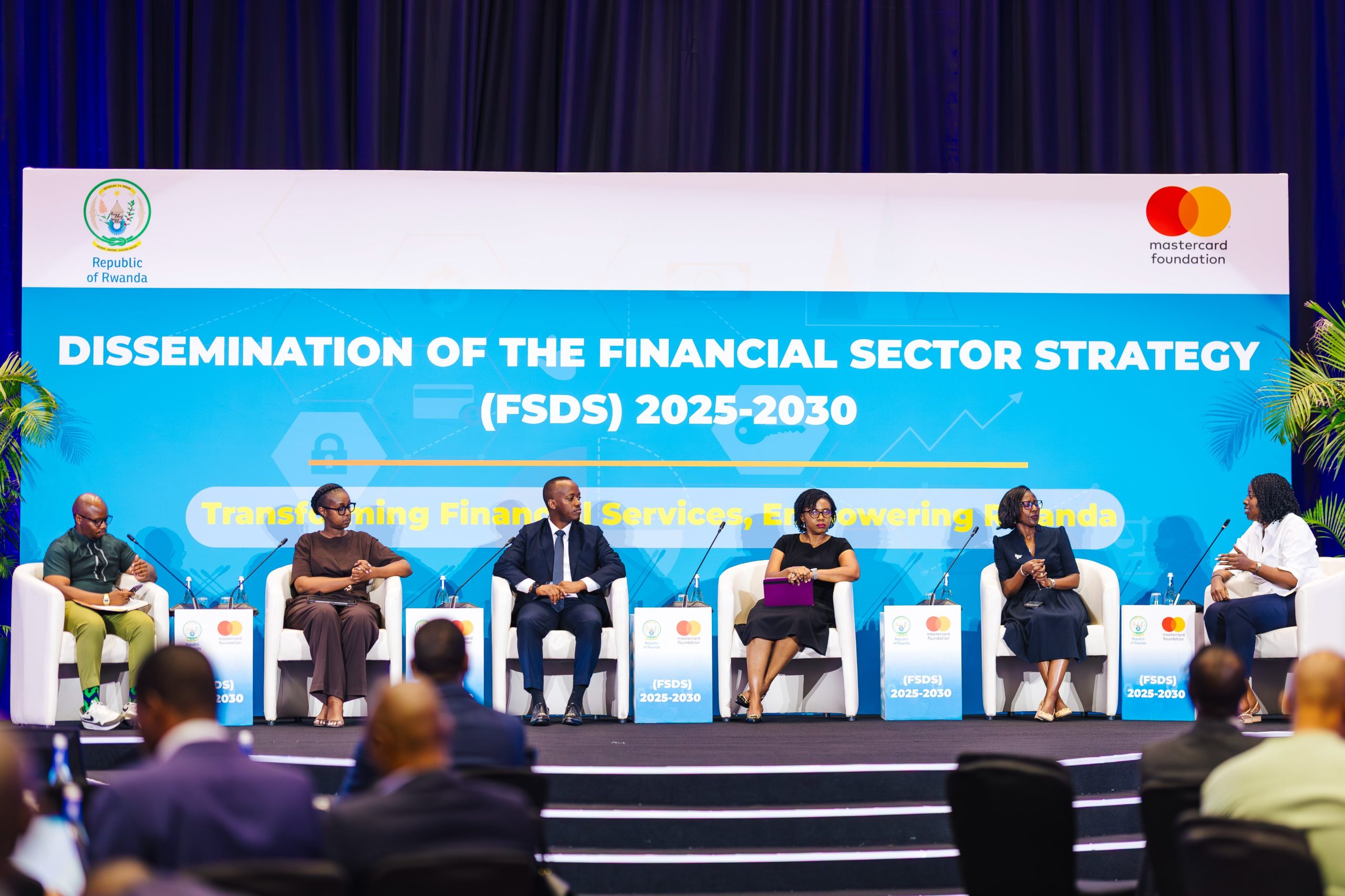
Rwanda has unveiled its new Financial Sector Development Strategy (FSDS) 2025–2030, a comprehensive framework designed to consolidate past achievements and chart a bold new path for the country’s financial ecosystem.
The strategy seeks to address persistent challenges such as low savings, high financial intermediation costs, and limited access to finance for small businesses, youth, women, and farmers, while harnessing opportunities in fintech, digital innovation, and sustainable finance.
Speaking at the official dissemination and implementation event, Herbert Asiimwe, Director of Financial Sector Development at the Ministry of Finance and Economic Planning, commended the collaborative spirit that shaped the strategy.
He noted that the FSDS is the outcome of extensive consultations involving financial institutions, regulators, policymakers, and development partners, whose collective insights strengthened its scope and relevance.
“I sincerely thank you for being here today and for contributing to the discussions that have shaped Rwanda’s financial sector strategy,” Asiimwe said. “Your inputs have been invaluable, and I am confident that this strategy reflects the needs of market players. Its success will depend on your continued engagement and leadership in turning it into tangible outcomes that will strengthen and transform Rwanda’s financial sector.”
Asiimwe highlighted major milestones that have laid the foundation for Rwanda’s financial transformation; the establishment of the Kigali International Financial Centre (KIFC), now ranked among Africa’s top financial hubs by the Global Financial Centres Index; the creation of Umurenge SACCOs in 2009 and their professionalization through automation and consolidation into stronger, sustainable institutions; the launch of the National Agriculture Insurance Scheme (Tekana Urishingiwe Muhinzi Mworozi), which has provided farmers with subsidized protection against weather shocks, pests, and diseases, boosting insurance uptake between 2020 and 2024; and the rollout of the Ejo Heza Long-Term Savings Scheme, which expanded pension coverage to informal sector workers. The rapid growth of Rwanda’s fintech industry, he added, has also improved convenience and accessibility of financial services nationwide.
These achievements have delivered remarkable results. Today, 96 percent of Rwandan adults are financially included, up from 93 percent in 2020, putting the country on track to achieve universal access to financial services. Yet, several challenges persist; low long-term savings continue to limit investment resources; the use of formal financial products remains modest due to limited awareness and insufficiently tailored solutions; financial services are underused in rural areas, particularly among women, youth, and MSMEs; and the cost of financial intermediation remains high, especially in payment systems, calling for innovative reforms to make services more affordable and accessible.
Deputy Governor of the National Bank of Rwanda, Nick Barigye, emphasized that the strategy’s impact will depend on how effectively it is executed. “A strategy is only as strong as its execution, and a well-executed strategy transforms outcomes,” he said.
“Policymakers must align fiscal and regulatory frameworks to promote innovation while maintaining stability. We must continue to invest in digital infrastructure, talent, and institutional capacity to ensure that our financial sector remains competitive and inclusive.”
Barigye also urged the private sector to take advantage of opportunities created by the FSDS and the Kigali International Financial Centre to expand inclusive finance and strengthen Rwanda’s position as a regional investment hub. “If we execute this strategy with discipline and purpose, it will not only deepen financial inclusion but also reinforce Rwanda’s role as a gateway for innovation and growth across the region,” he added.
Elisee Kamanzi, Head of Entrepreneurship and Enterprise Development at the Mastercard Foundation, echoed these sentiments, underscoring the collective responsibility required to realize the vision of the FSDS.
“Realizing the vision of the FSDS will require every part of Rwanda’s financial ecosystem to play its role — ensuring that credit, insurance, pensions, and capital markets work better for people and businesses,” Kamanzi said.
“When these elements move in harmony, Rwanda will not only expand financial access — it will build a system that is dynamic, trusted, and inclusive. At the Mastercard Foundation, we believe that finance is one of the most effective tools for reducing poverty and creating dignified work. Our Rwanda country roadmap is anchored in MSMEs and entrepreneurship — recognizing that small enterprises are the engines of employment, innovation, and resilience.”
The FSDS 2025–2030 aligns closely with Vision 2050 and the National Strategy for Transformation (NST2), ensuring that financial inclusion translates into tangible socioeconomic progress. It focuses on scaling savings and insurance for households; expanding credit access for MSMEs and farmers; leveraging digital services to empower women and youth; enhancing consumer protection and financial literacy; strengthening SACCO capacity and governance; fostering fintech innovation and alternative financing; and reducing geographic disparities through locally tailored interventions.
Beyond financial inclusion, the strategy seeks to build a sound and stable banking system by improving efficiency, promoting competition, safeguarding sector integrity, and enhancing professional skills. It introduces new regulatory frameworks for digital banks and agents, promotes mobile money borrowing, and emphasizes the use of big data and shared infrastructure to improve efficiency.
The Ministry of Finance and Economic Planning expressed appreciation to its partners, including the Mastercard Foundation and PwC, for their technical input and strategic collaboration.
“Together, through continued collaboration and leadership, we will successfully implement this strategy—delivering a stronger, inclusive, and resilient financial sector for Rwanda,” Asiimwe said in closing.
Ultimately, the FSDS 2025–2030 represents Rwanda’s determination to transform finance into a driver of equitable growth and opportunity.
By combining sound policy, private sector innovation, and digital transformation, Rwanda is positioning itself not just as a model for financial inclusion but as a regional powerhouse for innovation, trust, and shared prosperity.