
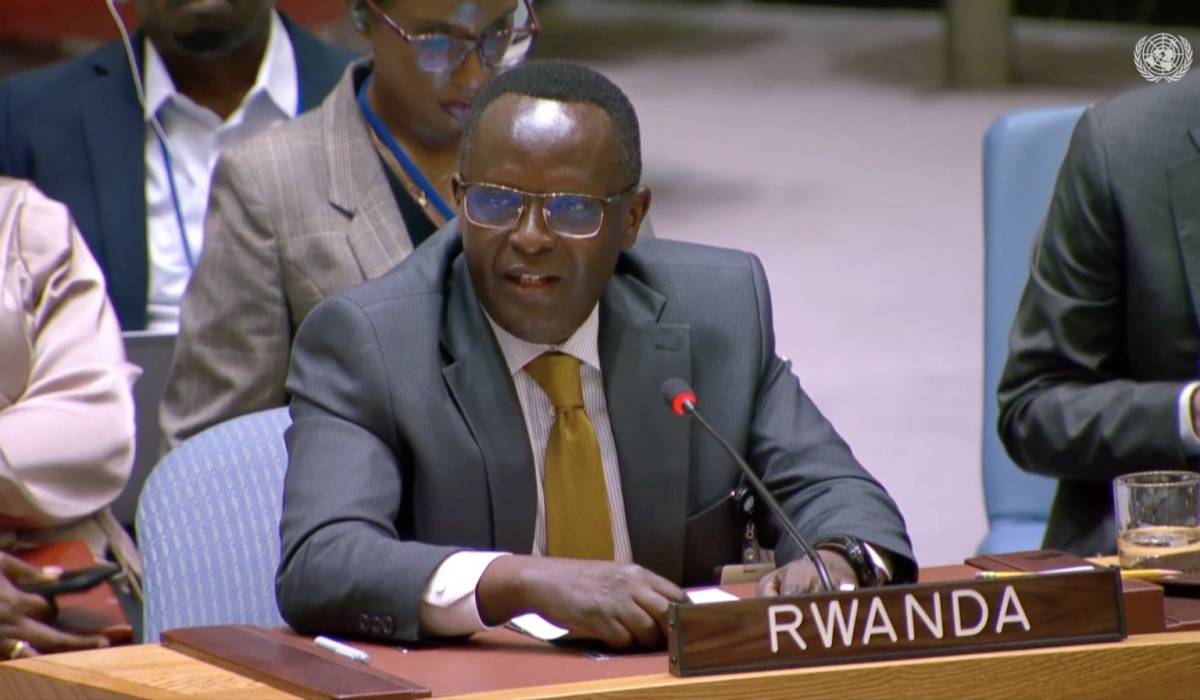
Rwanda has urged the United Nations Security Council to align its actions with the ongoing peace process between Kigali and Kinshasa, emphasizing that international interventions should complement, not complicate, the progress made under the Washington Peace Agreement.
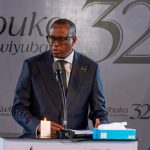
Addressing the Council, Rwanda’s Permanent Representative to the UN, Ambassador Martin Ngoga, said both Rwanda and the Democratic Republic of Congo (DRC) have already established a framework to resolve their differences and called on the international community to respect and support this African-led process.
“We have agreed between the Republic of Rwanda and the Democratic Republic of Congo on how to resolve our differences. We request the Council to support us in that process,” Amb. Ngoga told the meeting.
He stressed the need for the Council’s interventions to be harmonized with the progress achieved in the Washington negotiations, warning against parallel or uninformed actions that might undermine the peace efforts.
“At times, I can see either insufficient information before the Council on the progress in Washington, or there is a mismatch,” he observed, proposing that the representative of the United States brief the Council on the ongoing negotiations to ensure coherence.
Amb. Ngoga reaffirmed Rwanda’s full commitment to the Washington Peace Agreement and the Doha Declaration of Principles, facilitated by the United States and the State of Qatar, with support from the African Union. He described these agreements as “critical steps toward sustainable peace and reconciliation in our region.”
He further urged the Council and international partners to continue supporting these African-led, U.S.- and Qatari-facilitated efforts, which build upon the Peace, Security, and Cooperation Framework grounded in dialogue, mutual respect, and regional stability.
Turning to the security situation in eastern DRC, Amb. Ngoga expressed concern over the ongoing threats to Rwandan and Congolese Tutsi populations, saying the issue extends beyond resource competition.
“This is not a question about resources; it is about the existential threat posed to Rwanda by groups that have both the intent and the history of committing genocide,” he said.
He also highlighted the dire conditions of refugees who have lived in camps for nearly three decades, stressing that many of them were peaceful civilians whose livelihoods revolved around cattle grazing before being displaced by conflict.
Amb. Ngoga condemned recent attacks on civilian areas, particularly in Minembwe, and the continued targeting of Tutsi communities in Wuvira and other parts of the DRC.
“All we ask is for the Council to give us the chance to implement the agreement as it is, and not to intervene in ways that may complicate or derail the process,” he appealed.
The Washington Peace Agreement, signed earlier this year with facilitation from the United States and support from Qatar and the African Union, outlines measures for restoring trust, enhancing security cooperation, and achieving long-term regional stability between Rwanda and the DRC.