



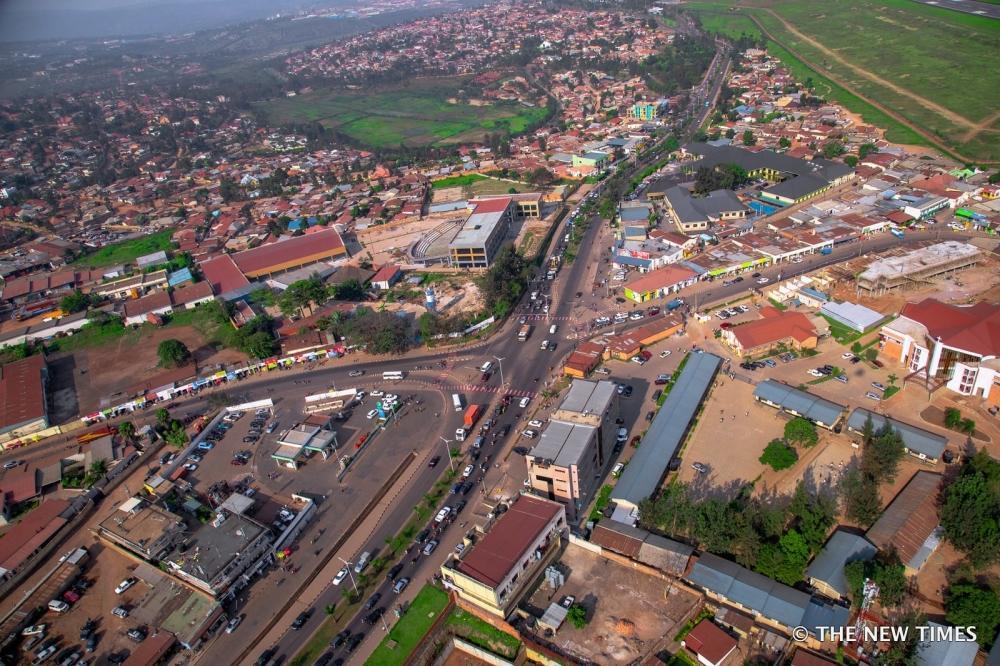
Rwanda’s Ministry of Infrastructure has announced the start of a major transformation of three key road junctions in Kigali; Sonatube, Gishushu, and Chez Lando. The work falls under the Kigali Urban Transport Infrastructure (KUTI) project.
It aims to ease traffic congestion; improve road safety; and modernise the capital’s transport system.
According to the Minister of Infrastructure, Jimmy Gasore, funding for the first phase has already been secured. “We are starting with the junctions at Sonatube, Gishushu, and Chez Lando, for which the funds are already secured, and work will begin soon,” Gasore told the Senate Committee on Foreign Affairs, Cooperation and Security on October 9.
The next phase will extend to Nyabugogo, Kinamba, Rwandex, and Kibagabaga once additional financing is obtained.
Technical studies conducted by the Rwanda Transport Development Agency (RTDA) in partnership with the African Development Bank (AfDB) recommended a mix of flyovers, underpasses, and geometric improvements.
These measures will help streamline traffic flow at Kigali’s busiest intersections. At Chez Lando, engineers plan a 740-metre underpass tunnel with modern signalisation and geometric improvements. At Gishushu, a 500-metre flyover bridge will separate traffic levels and improve connectivity.
At Sonatube, a 620-metre underpass along KN3 Road will ease movement toward Rwandex and help reduce congestion.
Minister Gasore said these projects will remove major bottlenecks during rush hours and make pedestrian crossings safer. “While the initial upgrades target three intersections, designs for the remaining junctions — including Nyabugogo, Kinamba, Rwandex, and Kibagabaga — have also been proposed,” he said.
At Nyabugogo, plans include two new flyovers, a 400-metre bypass road, and redesigned junction layouts to handle heavy traffic.
The Rwandex design proposes a new four-lane bypass with ramp bridges to reduce the impact on the Gikondo wetland. At Kibagabaga, the road will be widened to four lanes. Gisozi junction will feature a 540-metre flyover to increase capacity.
The ministry said all new designs will include features that support persons with disabilities. These will include braille traffic lights with audible signals; accessible pedestrian crossings; short ramps; and covered drainages to ensure safety and convenience for all.
Kigali will also introduce Variable Message Signs (VMS); electronic displays that give real-time updates on traffic conditions, accidents, and weather.
“These systems help inform drivers about congestion ahead, detours, or road closures, allowing them to make better decisions,” Gasore said. If successful, the system will later expand to other cities across the country.
The VMS initiative is part of a wider smart-traffic management plan supported by the International Road Assessment Programme (IRAP).
Through IRAP, authorities will assess road safety performance every 100 metres and develop data-driven strategies to reduce accidents.
Despite Kigali’s rapid growth, the city still faces major transport challenges. These include limited public transport integration; a lack of infrastructure for cyclists and pedestrians; and no dedicated bus lanes. These gaps have increased reliance on motorcycle taxis, which pose higher safety risks.
Gasore said the KUTI project will give priority to public transport. Some lanes will be reserved for buses during peak hours; smart traffic lights will favour high-capacity routes; and road designs will accommodate larger buses to improve efficiency.
In December 2024, the African Development Bank approved a loan of Rwf140 billion to support the KUTI project. The total cost is estimated at $279 million, or about Rwf386 billion.
The project will run for five years and aims to deliver a modern, safe, and inclusive transport system aligned with Kigali’s smart city vision.
During the Senate session, Senator Evode Uwizeyimana called for greater attention to pedestrian safety.
“Some zebra crossings are placed at corners or immediately after turns, creating sudden risks for both drivers and pedestrians,” he said.
Gasore assured lawmakers that such concerns will be addressed in the new designs to ensure safer and more efficient movement for all road users.