






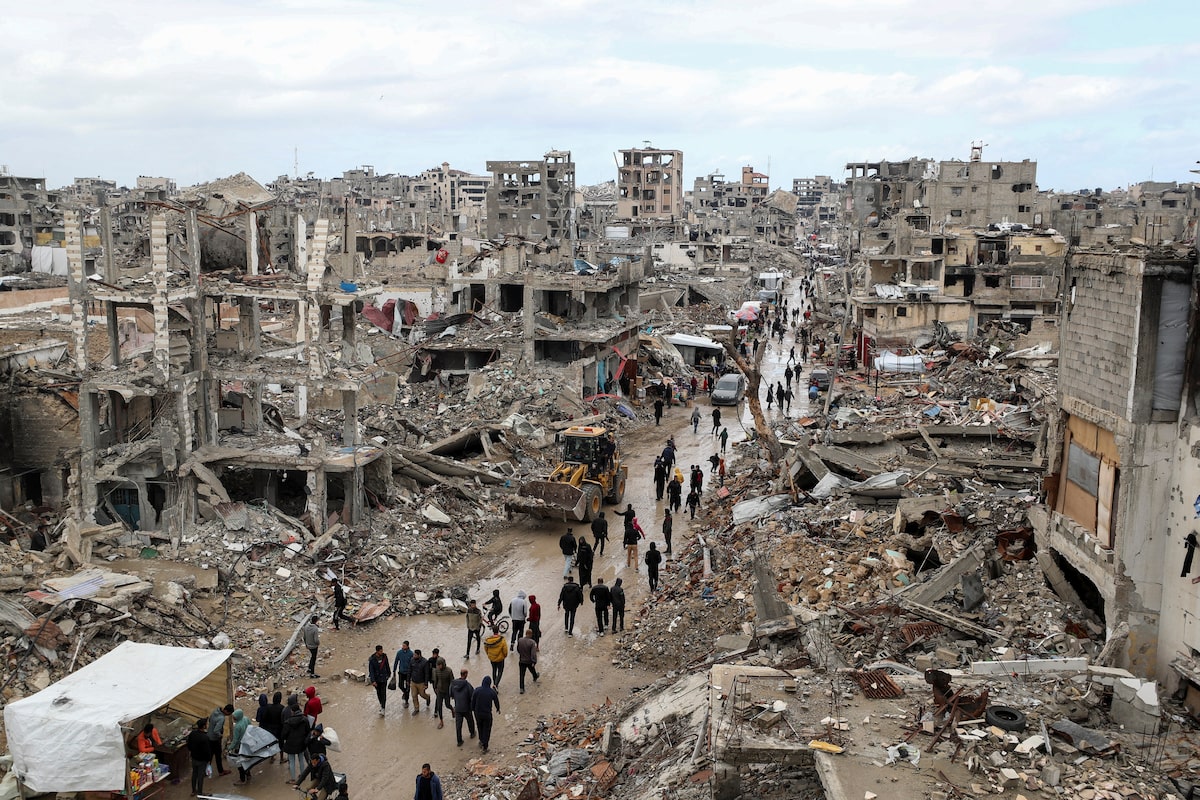
In August 2005, Israel made one of the most painful and divisive choices in its modern history: the unilateral withdrawal from the Gaza Strip.
Twenty-one settlements were dismantled and some 8,000 Israelis—families who had spent decades building homes, farms and schools—were ordered to leave. Soldiers carried crying children from their bedrooms; parents locked their doors for the last time while neighbours clutched each other and wept.
It was a national trauma meant to open a door to peace.
The reasoning was bold. Prime Minister Ariel Sharon argued that by removing every Israeli soldier and settler from Gaza, the daily friction with Palestinians would ease and diplomacy might finally take root. By September that year, Israel was gone.
Gaza was handed to the Palestinian Authority, and for a brief moment many dared to hope that the coastal enclave might become a pilot project for coexistence.
But peace never followed. In 2006, Palestinians elected Hamas, a terrorist organization openly sworn to Israel’s destruction.
What came next was a violent internal coup: Hamas gunmen hunted down political rivals, throwing some from rooftops. International aid, meant to build schools and hospitals, was diverted to rockets, weapons and an underground maze of terror tunnels.
Instead of nurturing a future of cooperation, Gaza became a fortress of hostility.
Over the years, millions of Israelis—especially in the small towns of the south like Sderot—have lived under the shadow of constant rocket fire.
Parents there tell stories of toddlers who know the sound of an air-raid siren before they know the alphabet. A grandmother recalls how her grandchildren can race to the bomb shelter in less than 15 seconds; it is a skill learned before bedtime stories.
The terror is not just physical, but psychological—a slow erosion of the feeling of safety.
Then came the morning of October 7, 2023, a day many Israelis now call their nation’s darkest since the Holocaust. More than 5,000 Hamas terrorists stormed across the border.
Over 1,200 people were slaughtered: men, women, children, even babies. More than 250 civilians and soldiers were kidnapped. Witnesses described unimaginable horrors—children burned alive, women raped, bodies mutilated.
For Israelis, it was not only an attack on lives but on the very idea that peace might one day be possible.
The Gaza disengagement now stands as a stark reminder of Israel’s enduring dilemma: how to balance the quest for peace with the need for security.
Each time Israeli leaders have taken steps to reduce confrontation—whether by making territorial compromises or scaling back the military footprint—they risk creating a vacuum that terrorists exploit.
Nearly two decades later, the debate inside Israel remains raw. Some argue the withdrawal was necessary to end the costly burden of governing two million Palestinians.
Others see it as a tragic miscalculation that emboldened Hamas and left Israelis more vulnerable. What is certain is that the hopes of 2005 collided with the reality of terror and radicalism.
Today the world and the United Nations are themselves divided. Some governments and international organizations accuse Israel of extreme retaliation and excessive violence against Palestinians, calling urgently for a two-state solution.
Others sympathize with Israel’s right to defend itself against those who openly vow its annihilation. This global split has only deepened the sense of isolation for many Israelis, who feel their very existence is being debated on the world stage.
For Jews, the lesson feels painfully clear. They believe they are facing an existential threat, and that to prevent any attempt on even a single Jewish life, the ultimate price for aggression must be catastrophic.
The message Israel sends to its enemies is blunt: the aggressor has a choice—leave Israel alone in peace, or pay a price too heavy to bear.
The story of Gaza since the disengagement is more than a timeline of rockets and retaliation. It is a cautionary tale: when the search for peace meets those committed to war, the result can be a cycle of bloodshed that scars generations.
For many Israelis, the lesson of Gaza is that good intentions are not enough when faced with terrorists who view peace itself as a target.