





I watch the news unfold from Tel Aviv, Gaza, and beyond, thousands of kilometers away, trying to make sense of a conflict that seems both immediate and incomprehensible.
Israel, a small nation in a volatile region, is under constant threat. Every siren signals danger. Every rocket or infiltration attempt reminds citizens that survival is never guaranteed.
From afar, it is easy to forget that Israel’s defensive operations have left indelible marks across Gaza and the West Bank: streets flattened, buildings reduced to rubble, lives upended.
Its military reach has also extended beyond its immediate borders, striking Iranian-backed positions and, most recently, targeting sites in Qatar, signaling the seriousness with which it treats threats to its security.
Yet Israel’s challenges are not only on the battlefield. They extend into the corridors of global diplomacy. From Kigali, watching headlines in Europe, the U.S., and China, it is clear Israel is increasingly isolated and pressured.
Western nations call for restraint. China, ever more assertive in international forums, seems to poke its eyes at Israel, pointing an aggressive finger and warning of consequences for its military operations.
Meanwhile, global discourse frequently frames the conflict in terms of “Palestinian suffering” while carefully omitting Hamas. This rhetorical strategy is deliberate: mention Hamas, the recognized terrorist organization responsible for much of the violence, and the narrative shifts, complicating any critique of Israel’s actions.
From a distance, Israel’s position looks both constrained and embattled, forced to defend its citizens while navigating international scrutiny.
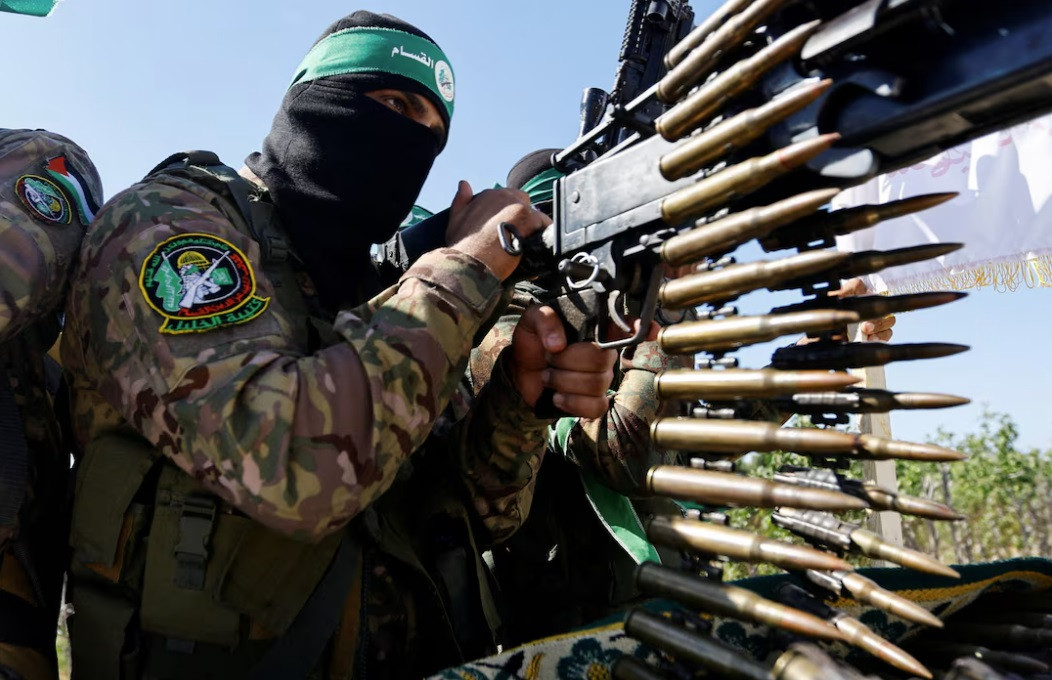
Hamas, the organization Israel faces, is no ordinary political opponent. Born in 1987 during the first Intifada, Hamas combines religious ideology with militant strategy. Its charter casts the liberation of Palestine as a divine mission, describing armed struggle—jihad—as the noblest path.
Peace negotiations, it insists, are distractions. Even after revising its charter in 2017 to acknowledge a provisional Palestinian state within the 1967 borders and to distinguish its opposition to Zionism from opposition to Judaism, Hamas continues to reject Israel’s legitimacy and frames the conflict as existential and religious.
Its leadership, from Khaled Mashaal to Ismail Haniyeh, repeatedly emphasizes that victory comes through resistance, not diplomacy, and that the liberation of all historic Palestine remains the ultimate goal.
This ideological rigidity makes negotiation exceedingly difficult. Palestinian authorities may pursue a two-state solution, but Hamas’s influence ensures that compromise is limited, and that ordinary Palestinians—like Layla, a schoolteacher in Gaza—live in a landscape dominated by ideology and conflict.
Meanwhile, Israeli citizens face existential threats from attacks deliberately aimed at erasing their state. From Kigali, the human dimension becomes clear: the war is not only territorial but profoundly ideological, a clash of survival and belief.
Israel’s military operations, both defensive and retaliatory, have left scars across the region. The rubble of Gaza and the West Bank tells the story of asymmetric warfare, while strikes against Iranian-backed positions signal Israel’s willingness to act far beyond its borders to protect itself.
These actions are simultaneously strategic, retaliatory, and deeply controversial, drawing condemnation from the international community and scrutiny from global powers. Yet from the Israeli perspective, they are essential measures in an existential struggle against an enemy whose ideology leaves no room for negotiation.
This article marks the first in a series exploring the Israel-Hamas conflict through multiple lenses: ideology, history, politics, and human experience.
Over the coming weeks, I will examine Hamas’s charters and manifestos, Israel’s military and political strategies, the lived experiences of ordinary civilians, and the complex web of international pressures shaping the region.
From afar, removed from sirens and checkpoints, it is possible to see patterns, forces, and consequences that are often lost in the immediacy of headlines: why peace remains elusive, why ideological rigidity complicates diplomacy, and why Israel’s struggle is both existential and profoundly misunderstood by much of the world.
Disclaimer: My views do not reflect the editorial line of this publication.