



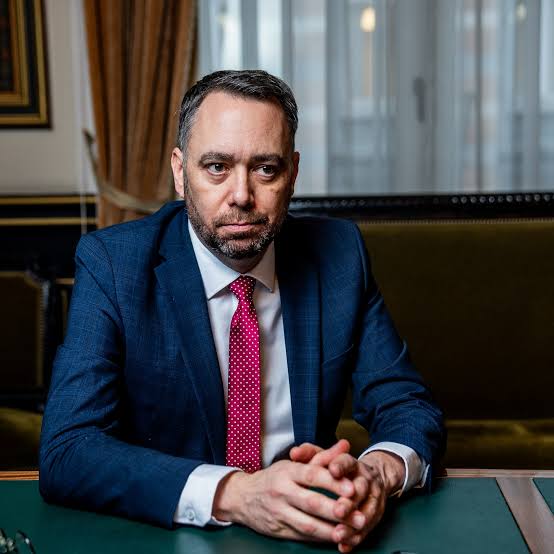
Belgium’s Foreign Minister Maxime Prévot has warned that sanctions are not a “miracle recipe” for the crisis in eastern Democratic Republic of Congo (DRC), but his remarks are being met with skepticism given Brussels’ recent diplomatic crusade to isolate Rwanda on the global stage.
In an interview with Jeune Afrique on September 16, Prévot argued that punitive measures alone cannot resolve the complex conflict in eastern DRC. “In the east of the DRC, sanctions are not the miracle recipe,” he said, calling instead for deeper regional and political engagement.
Yet the comments come only months after Belgium spearheaded efforts within the European Union and beyond to pressure Rwanda with sweeping sanctions. Brussels actively pushed for freezing assets, suspending development aid, discouraging investments, and even boycotting cooperation with Kigali.
Rwanda, in turn, accused Belgium of waging a deliberate campaign to undermine a developing nation rather than engaging constructively on regional peace.
On March 17, in response to EU plans to sanction leaders of the M23 rebellion and senior officers in Rwanda’s Defence Forces, Kigali severed diplomatic ties with Brussels.
The move highlighted how Belgium’s lobbying—seen in Kigali as demeaning and hostile—had poisoned relations, leaving little space for dialogue.
Against this backdrop, Prévot’s softer tone now appears less like a policy shift and more like an attempt to whitewash or save face after months of aggressive diplomacy that failed to yield tangible results.
Observers in the region view his remarks as an effort to recalibrate Belgium’s image, which has been tainted by accusations of bias in favor of Kinshasa and hostility toward Kigali.
The conflict in eastern DRC remains a flashpoint, pitting Congolese government forces and allied Wazalendo militias against the M23, a movement rooted in grievances of marginalized communities.
Kigali has repeatedly denied accusations of backing the rebels, insisting that regional solutions—not sanctions or scapegoating—are the only viable path to peace.
Prévot’s interview comes as the United Nations and regional actors assess the soaring cost of peacekeeping missions in Congo and question whether sanctions-heavy policies have done more to entrench divisions than to promote peace.
While Belgium now urges caution, many in Kigali see hypocrisy rather than sincerity.
It is traditionally believed that there are no permanent enemies in politics, maybe Belgium is genuine, but it’s hard to believe them considering the magnitude and the nature of the impasse.