
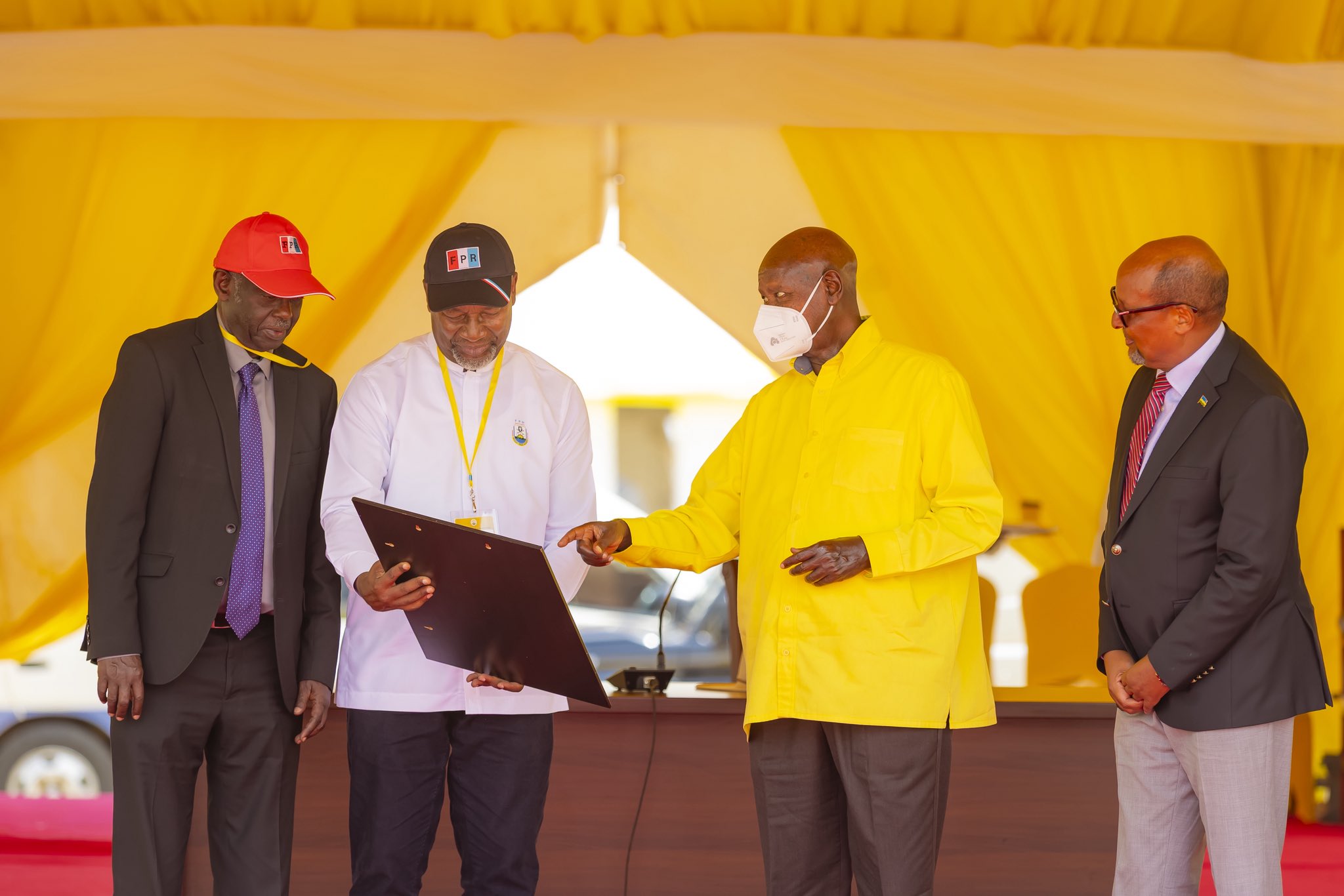
Rwanda’s ruling party, the RPF-Inkotanyi, reaffirmed its commitment to Pan-African solidarity and regional integration during Uganda’s National Resistance Movement (NRM) National Delegates Conference, held at Kololo Independence Grounds in Kampala from 27 to 28 August.
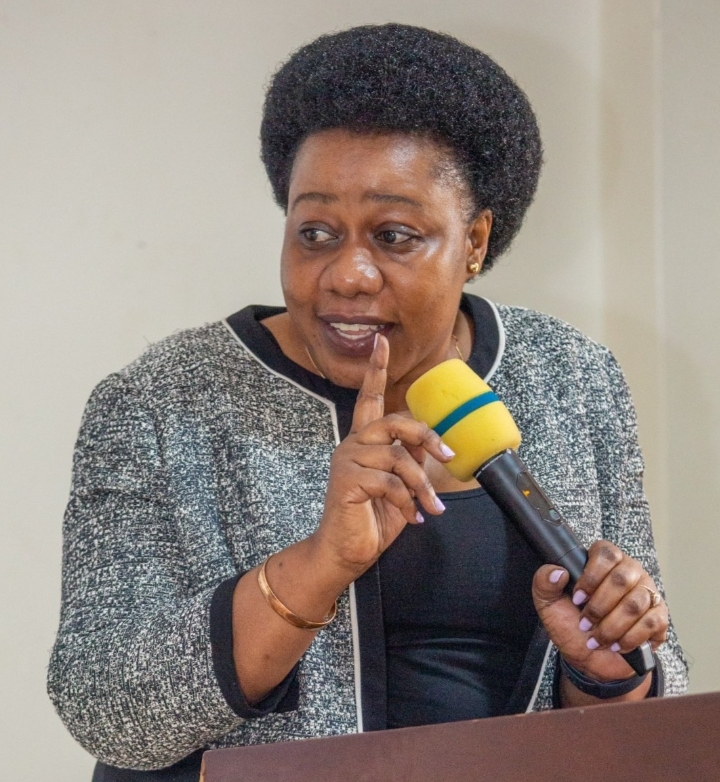
The RPF delegation was led by Secretary General Ambassador Wellars Gasamagera, who highlighted the long-standing political, historical, and ideological bonds between the two liberation movements.
In his address, Amb. Gasamagera emphasized that regional integration was not a choice but a necessity for East Africa, stressing that the East African Community must serve as the cornerstone of economic growth, peace, and people-to-people cooperation.
He said the RPF-Inkotanyi remains committed to advancing a common vision for a united, stable, and prosperous East Africa, affirming Rwanda’s pledge to strengthen the EAC as a platform for collective security and development.
The presence of the RPF at the conference carried symbolic weight. Both movements were born out of liberation struggles, the NRM under President Yoweri Museveni in Uganda and the RPF under President Paul Kagame in Rwanda.
Their relationship is rooted in a shared history of military and political solidarity dating back to the 1980s, when RPF cadres found refuge and support in Uganda during the liberation war.
In recent years, relations between Rwanda and Uganda have faced tensions over security and cross-border concerns, yet the participation of the RPF in Kampala signals a reaffirmation of friendship and a deliberate effort to sustain political dialogue at the highest levels.
Gasamagera’s remarks also reflect a broader Pan-African concern that fragmentation and isolation weaken the continent.
Both Rwanda and Uganda are carefully watching the conflict in eastern Democratic Republic of Congo, where multiple armed groups, regional rivalries, and foreign interests converge to threaten the security of the wider Great Lakes region.
For Kigali and Kampala, what happens in the DRC directly impacts their borders, economies, and citizens’ safety. Both movements understand that instability in Congo undermines integration and threatens progress in East Africa.
The weight of history shapes this cautious stance. Both the RPF and NRM were involved in Congo’s past conflicts, including their support for the Alliance of Democratic Forces for the Liberation of Congo (AFDL), which toppled Mobutu Sese Seko in 1997.
That campaign drew on their liberation experience but also exposed the dangers of fragmentation, sparking further wars that drew in multiple African states and left a legacy of unresolved security questions.
These experiences continue to inform their approach to developments in eastern Congo today.
The Secretary General stressed the importance of maintaining and expanding the friendship between the two parties, describing collaboration as a cornerstone for the region’s progress.
This partnership extends beyond political solidarity to shared security interests, economic cooperation, and cultural ties between Rwanda and Uganda.
As Uganda’s NRM gathers momentum through its congress and Rwanda continues to champion regional integration, the two movements appear intent on renewing their partnership to confront present-day challenges.
The conference served as both a reminder of their liberation heritage and a call to chart a common future.
For both RPF and NRM, Pan-Africanism is a strategic vision for navigating the challenges and opportunities of the 21st century, including the urgent matter of restoring lasting peace in eastern Congo.