



Rwanda’s global image is extreme because the country itself is extreme in intent. To some, it is a miracle; disciplined, ambitious, an African Singapore, they say.
To others, it is a menace, an irritant, a state that dares too much and unsettles old orders. This polarity is not accidental. It reflects a country that chose to close a catastrophic chapter and re-found itself on sovereignty, self-reliance, and deliberate state-building.
That choice unnerves entrenched interests and unsettles foreign imaginations of what “Africa” is supposed to look like; PRIMITIVE!
The historical engine is clear.
In 1959, Belgium dismantled Rwanda’s monarchy and engineered a system of ethnic division that produced cycles of violence, exile, and eventually the 1994 Genocide against the Tutsi. By the time the killing stopped, Rwanda was not merely broken; it was stateless. The expectation from the world was simple; permanent dependency, a slow crawl through decades of aid-driven rehabilitation.
But the Rwandan Patriotic Front thought otherwise. It chose not to recycle colonial templates but to write a new script, one grounded in sovereignty, public goods, and national discipline.
This stance produced friction almost immediately.
In the late 1990s, Rwanda did the unforgivable in the eyes of the aid establishment; it cut the feeding tube.
Dozens of NGOs in this small country had entrenched themselves as permanent caretakers, creating parallel services and ensuring dependency. Rwanda pushed back, insisting on state-led systems and rejecting projects that could not be scaled nationally.
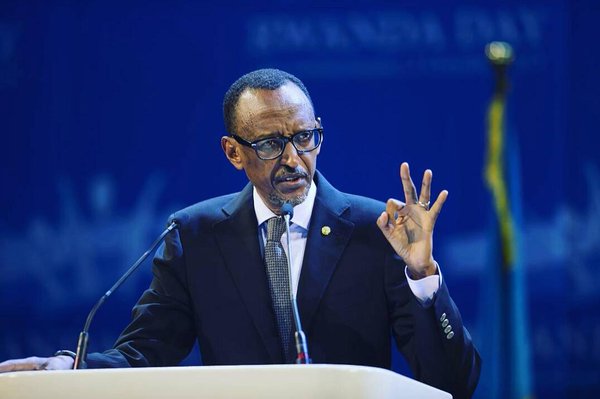
When you hear them call President Paul Kagame all sorts of names and drawing devilish caricatures; that’s where is all began.
Critics called this move hostility; and defenders called it sovereignty. The result was predictable; bad press, hostile reports, and a powerful narrative war. But the Rwandan state persisted, knowing that to depend permanently on others is to surrender sovereignty.
From this foundation grew a practical, modular blueprint. Rwanda has treated education as compulsory and progressively free, extending years of schooling to build a future workforce.
Its community-based health insurance has reached millions, offering access while still straining under sustainability challenges. Mortality rates have dropped sharply; maternity deaths are falling; children are better nourished, with diets supplemented by government programs and community nutrition centers.
Families in rural hills receive monthly support, and clinics now track progress digitally.
On another spectrum, Chinese investors have piloted renewable energy-powered health posts; and Germans have tested mobility and medicine concepts, Americans mobile health and telemedicine projects; British innovators have introduced school nutrition programs and green transport.
Ethiopians are here, Kenyans are in banking and services sector, Israelis in Agriculture, French in energy and education, who isn’t here? Even Belgians are here . They have been here for a century anyway. Pun intended.
Kigali has deliberately positioned itself as a laboratory for innovation. The example is famous; a hilltop midwife requests blood; minutes later, a Zipline drone crosses the valley and drops a life-saving package. That story; replicated many times; explains why Rwanda attracts technologists and investors eager to prove concepts.
In everyday life, the effects of a new Rwanda are visible.
People are clean; homes are kept tidy; food is abundant in markets and increasingly nutritious. Pupils are fed at school.
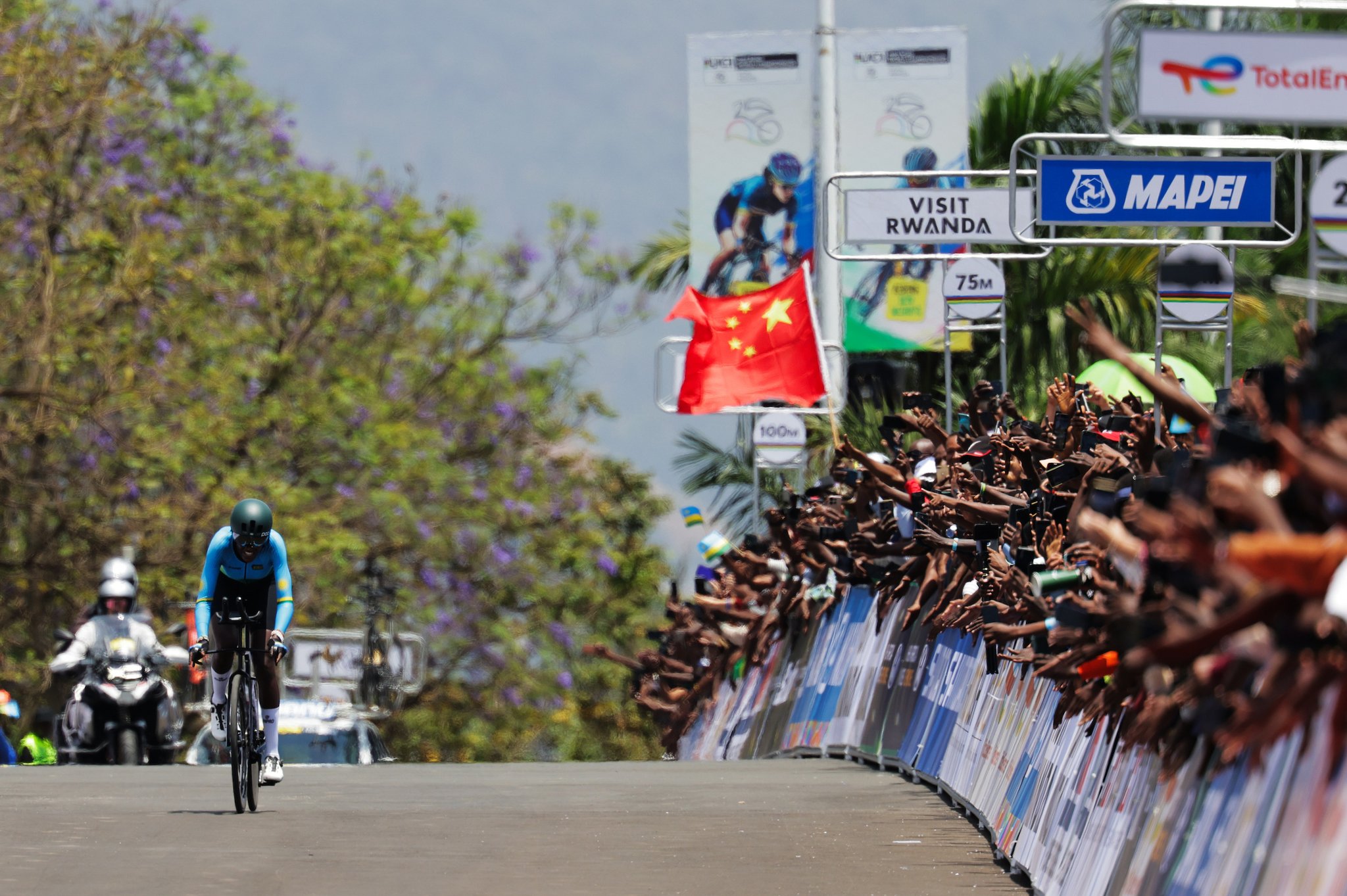
Sports infrastructure is taking shape; from national football academies to cycling programs producing world-class talent. Children in remote areas now play basketball on newly built courts, with coaches funded by private investors.
Even small towns host annual marathon events that attract participants from across the world. A teenage refugee from the DRC now competes in Kigali’s youth football league; a Syrian family runs a small bakery in a government-supported settlement.
And the same posture drives bigger bets; Kigali Innovation City, pharmaceutical hubs, ICT, manufacturing, and even space ambitions under the Rwanda Space Agency.
Diplomatically, Rwanda has surprised the world. Its footprint has expanded dramatically, physically and virtually.
Did you see Ambassador Martin Ngoga yesterday? Rwanda does not appear in forums as a pleading victim but as an equal.
At the UN Security Council, the world watched a different kind of African voice. Ambassador Ngoga; a seasoned prosecutor turned diplomat, smooth and precise, sat in the room not to cry for help but to demand respect after a baby crying Congolese counterpart.
Step by step, citing the UN’s own resolutions, he exposed the hypocrisy of selective application, the double standards that undermine Africa. With surgical language, he poked holes in the global system. This was not the familiar spectacle of Africa appealing for pity; it was a demand for consistency and execution. For some it was shocking, for others refreshing, but for all it was unmistakably Rwanda; refusing to play the assigned role; taking orders, towing the line and extending a begging hand.
Not to say Rwanda doesn’t need help, but only a dignified one is welcome.
Security is approached in the same manner. Rwanda frames its cross-border actions; whether in dismantling militias or supporting stabilization efforts; as regional housekeeping. Stability is treated as a prerequisite for development, and when neighbors fail to act, Rwanda fills the vacuum.
This posture earns admiration for effectiveness and alarm for assertiveness. In a volatile Great Lakes region and other parts of Africa, Rwanda’s doctrine is simple; security cannot be outsourced.
That approach has led Rwandan forces to dismantle entrenched terror networks, disrupt extremist groups in Mozambique and Central Africa.
Where others deploy blue helmets and wait, Rwanda deploys disciplined battalions and reopens schools, clinics, and markets behind the frontline. Children return to school; markets resume trade; and clinics provide care; showing that security is both shield and development enabler. This is not African. It’s meant for America or NATO. Who is Rwanda to assign itself such a responsibility?
Ironically, the smallest state in the neighborhood has become the most hospitable. Rwanda today hosts about 150,000 refugees from Africa, Asia, and even Europe. Families arrive at transit centers carrying only plastic bags, a grandmother, and a child. They are met with registration, food, and schooling in camps, even as richer countries turn away.
At the same time, notably, Rwanda opens its economy to international investors, offering a proving ground for bold concepts in health, education, technology, and manufacturing. It has become, simultaneously, a sanctuary for the displaced and a laboratory for the future. Frankly Rwanda unsettles foreign visitors because it upends expectations.
But here is how Rwanda bites the bullet. Tourists arrive expecting what has long been associated with Africa; chaotic politics, corruption at every turn, dirt and filth in city streets, prostitution as a visible economy, shambolic policing, and the permanent threat of disease. They expect wild animals without conservation, unsafe cities where walking at night is impossible, and governments that barely function. Instead, they find something jarringly different.
Kigali’s streets are clean, plastic bags banned, garbage collected with precision. Police officers are professional, respected, and rarely predatory. Prostitution is not allowed to dominate the city’s social fabric. Tourists walk late at night without harassment; neighborhoods are patrolled efficiently; and public spaces, like Nyamirambo Market, are maintained to hygiene standards rarely seen in Africa.
They encounter a false story foretold.
Political stability; institutions project order; and corruption; while not eliminated; is punished with unusual swiftness. Rwanda is safe, orderly, and determined to demonstrate that Africa is not condemned to dysfunction. Even Parliament has matured; debates are conducted without throwing chairs or calling names; reflecting a growing political culture of discipline.
Yet Rwanda is not a paradise for Christ’s sake.
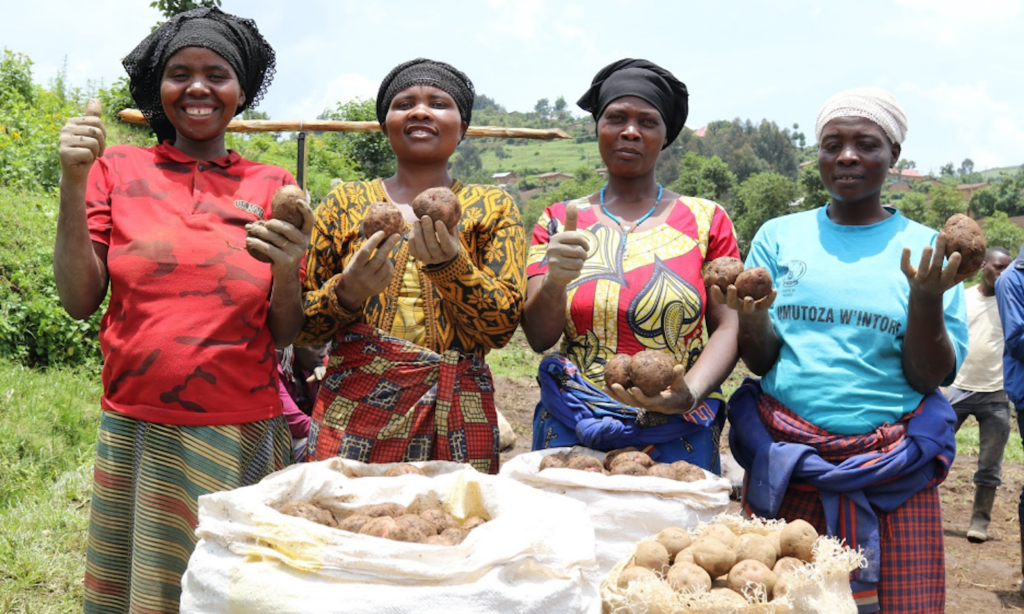
The contradictions remain. Rwanda is still poor. In rural hillsides, families live in mud houses, farming for subsistence. Access to markets is fragile; primitive practices persist. Some citizens, haunted by the past, still cling to ethnic politics; proof that tribal thinking has not evaporated. The scars of history are not erased by clean streets in Kigali. Human rights activists still devour on it. It’s the bad press, the diplomatic tackles behind closed doors and the fabricated reports you see every day.
But here lies Rwanda’s paradox; poor in material wealth, rich in posture. It is a country of modest means and vast ambition. Its national attitude is to dream beyond survival; industrialization, pharmaceuticals, digital governance, even space exploration; while walking toward these goals step by disciplined step. That combination of realism and aspiration defines the Rwandan experiment.
It is important to note that Rwanda is not alone in this instinct. Across Africa, different countries have sought their own paths of dignity. Ghana of Kwame Nkrumah dreamed of pan-African sovereignty; Tanzania under Nyerere experimented with ujamaa socialism; Ethiopia in the 2000s pursued a developmental state.
More recently, smaller states like Botswana have carved out their own models of stability and resource management.
But Rwanda stands apart not because it is the only one thinking outside the box; but because it does so with a discipline and audacity that seem, to outsiders, almost implausible. The sheer contrast between its size, its trauma, and its ambition makes its story feel unique; even unexpected. It advocates for electric cars, climate action initiatives, fairer trade agreements, and that’s really bad for the established world order. Rwanda does what it preaches. And that’s being a bad teacher. The price is hefty, but the reward is worth it.
It explains the extremes of reaction. Rwanda’s critics are a mix; some raise real concerns about political space and freedoms; others are networks whose influence depended on aid, chaos, and weak states. Their hostility often sounds less like principled critique and more like a defense of threatened rents and narratives. Architects of the old Rwanda have no space anymore. They can only rant and age miserably.
Admirers, meanwhile, see a results-oriented model; order, accountability, ambition; that refuses the fatalism often assigned to Africa.
The truth lies between miracle and myth. Rwanda is not a paradise; it is not a dystopia. It is a deliberate experiment; scarred yet ambitious, materially poor yet institutionally assertive, culturally contested yet determined. Its refusal to be scripted as weak unsettles those who benefit from Africa’s dependency. Its determination to move brick by brick toward modernity inspires those who see possibility.
Rwanda’s true threat to the old order is not that it is “too clean” or “too Western.” Its true challenge is that it has chosen sovereignty and capability over dependency.
That choice unsettles, provokes, and polarizes. But it also invites a more honest debate about aid, power, and Africa’s future. Rwanda is not un-African. It is Africa insisting on its right to dream, to build, and to be respected.