




On land once scarred by tragedy, where UN peacekeepers stood powerless and where Amahoro Stadium sheltered thousands fleeing the 1994 genocide against the Tutsis, Rwanda has boldly planted a flag of ambition, memory, and transformation.
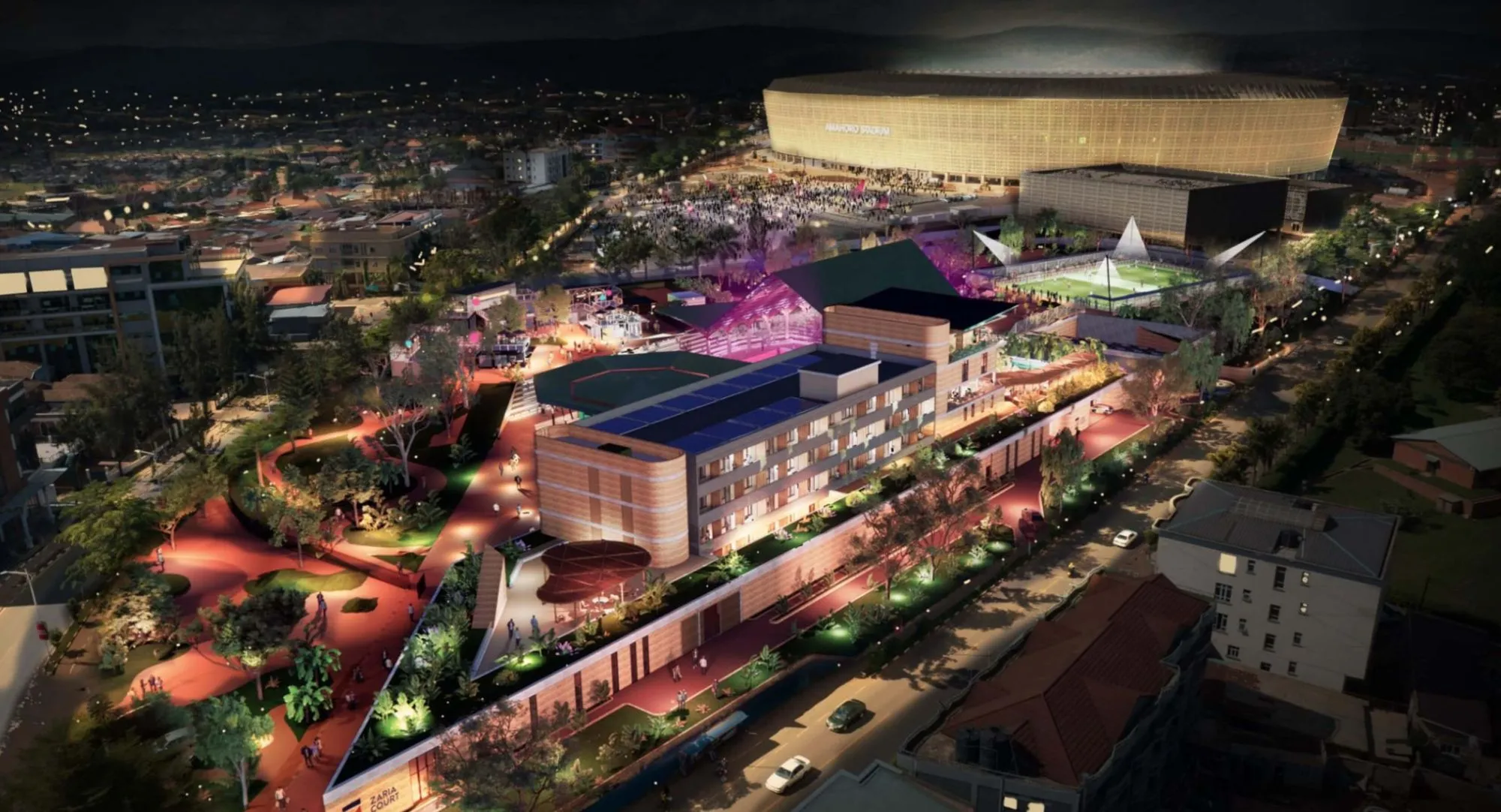
On July 28, that very ground revealed a powerful new presence to the world: Zaria Court Kigali, a US$26 million mixed-use complex that vibrantly pulses with culture, sport, commerce, and community. In less than three years, a once-neglected site has been transformed into a dynamic city-within-a-city.
Where people once cried for water, café tables now buzz with conversations over steaming cups of Rwandan coffee.
Where silence once represented fear, voices now ring with laughter, ambition, and song.
Adding to its cultural heartbeat, ArtRwanda-Ubuhanzi has officially moved into Zaria Court—because, as they put it, they belong at the coolest spot in town. From here, visitors can shop for stylish fits to match their swag or pick up a Made in Rwanda art piece to start their collection, placing local creativity at the heart of this new urban landmark.
President Paul Kagame, who officially launched the project, declared it a continental call to action; “Zaria Court is not just a project; it’s a signal. Its influence reaches far beyond Rwanda. The power of sport unifies people, but its true strength lies in shaping talent, character, and unity.”
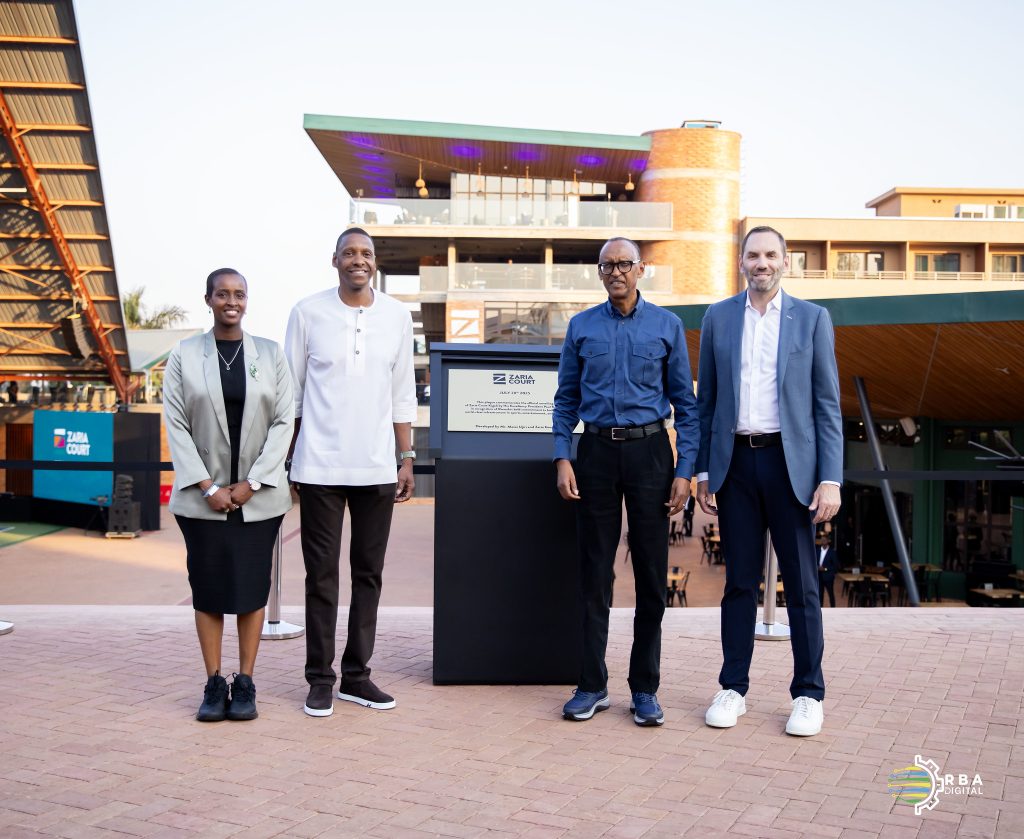
Just 200 meters from Amahoro, the symbolism is unmistakable. For decades, this site represented sorrow. Today, it stands as a bold beacon of hope and progress.
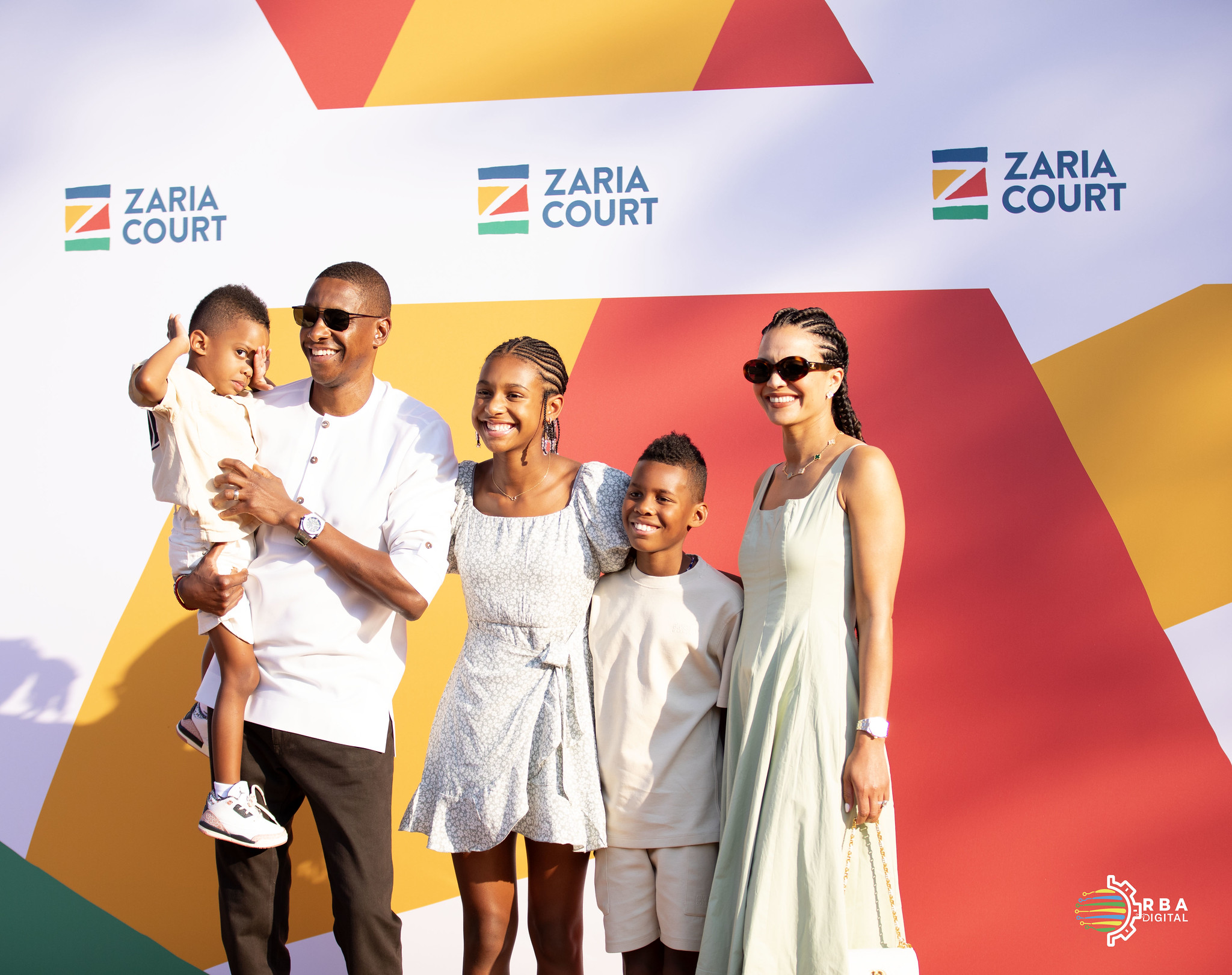
Constructed by the Zaria Group, co-founded by NBA champion Masai Ujiri and Helios Sports and Entertainment, this project sets a new standard for African reinvention.
It’s the first of several flagship venues under the Zaria Court brand, designed to revolutionise how Africa builds, performs, and dreams. “We’re not merely opening a venue,” Ujiri asserted. “We are opening minds. Zaria Court is where African excellence takes center stage, where dreams are realised, and where the world is invited to recognise us for who we are: bold, brilliant, and unapologetically African.”
From the outset, this project has been deeply personal. Ujiri vividly recalled walking the site in its early days, still steeped in memory: “There was dust. There was silence. But I envisioned the future—children playing, music, light, and life. That vision is now a reality.”
The development boasts an 80-room boutique hotel operated by Aleph Hospitality, a state-of-the-art 2,000-seat event space, public basketball courts, five-a-side football pitches, a fully equipped gym, podcast studios, co-working spaces for young creatives, and a vibrant pedestrian boulevard featuring curated restaurants, shops, sports bars, and a children’s playground.
All of this is strategically nestled beside Kigali’s BK Arena and the newly renovated Amahoro Stadium, forming a premier African sports and entertainment district.
The location is intentional; situated at the crossroads of memory and momentum. “We recognised what was here and what could be,” Ujiri stated. “This isn’t just a physical transformation; it’s about reclaiming our narratives from a position of power.”
Designed by NLÉ Works under the visionary leadership of Nigerian architect Kunlé Adeyemi, and executed locally by Rwanda’s Real Contractors, this project has been constructed with precision.
Technology systems were spearheaded by Clayton Technologies, while QA Venue Solutions, already managing the BK Arena, now oversees operations at Zaria Court.
Zaria Court is poised to serve over one million people annually—from sports fans and artists to entrepreneurs and schoolchildren. More than 500 jobs have already been created, with dedicated programs supporting women-led businesses and youth enterprises.
Andrew Feinstein, Managing Director of Zaria Group, emphasised the broader impact; “We talk a lot about infrastructure in Africa, but rarely do we build with dignity, joy, or community in mind. This space accomplishes all of that. It stands as proof of what African cities can achieve when we refuse to seek permission and take decisive action.”
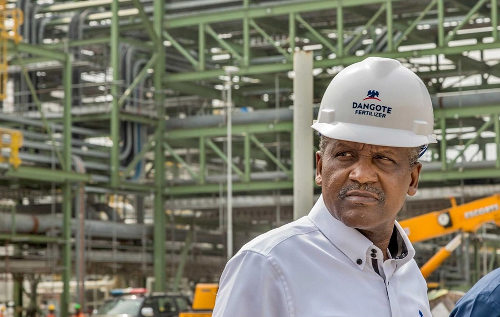
The launch event was as grand as the vision itself, welcoming hundreds of dignitaries, cultural icons, investors, and youth advocates. Among the guests were Aliko Dangote, Robin Roberts, Clare Akamanzi, Amadou Gallo Fall, Chiney Ogwumike, Michael Blackson, and Fred Swaniker.
From the balconies of nearby offices, Kigali residents watched with pride. What once seemed like a distant fantasy is now a living, thriving reality filled with promise.
Throughout construction, many observed from their office windows or during their daily commutes, initially curious but increasingly awestruck as steel and scaffolding transformed into vibrant spaces.
This became a silent ritual: morning coffees shared beside glass panes overlooking a dream coming to life before their eyes. “There were nights the workers never stopped,” said one nearby resident. “Even at 2 a.m., you could hear hammers and drills. They weren’t just constructing a place; they were building belief.”
Chiney Ogwumike, addressing young Rwandans directly, urged them to claim their space; “This place is yours—to build, to play, to lead. Africa is no longer a side story—we are at the forefront now.”
Akamanzi, reflecting on Rwanda’s remarkable journey, encapsulated the sentiment; “Zaria Court is the result of when vision, policy, and belief converge. This isn’t just Kigali’s victory; it’s Africa’s declaration.”