





What began as a dream wedding at one of Lake Kivu’s newest hospitality gems quickly spiraled into a storm of public fallout, social media outrage, formal complaint letters, and institutional interventions.
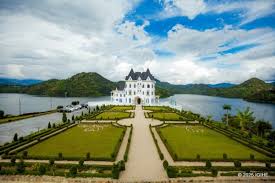
At the center of it all was a lavish four-day event hosted at Château Le Marara—a grand, European-inspired boutique hotel in Karongi—between July 3 and 6, 2025. The families of Musemakweri and Uwizeye, both prominent figures in Rwanda’s upper social and professional circles, had chosen the venue to celebrate their children’s long-awaited union. They booked the property as early as December 2024 and formalized the agreement in April 2025.
The terms were straightforward: the hotel’s 20 rooms and presidential suite were negotiated down from $350 to $220 per night and from $1,000 to $700 respectively, bringing the total accommodation bill to $15,300. Catering was agreed at $30 per guest for the civil wedding ceremony, attended by 300 guests, and $15 per guest for the traditional ceremony, totaling $12,000. The full package came to $27,300. A 30% deposit ($8,190) was paid upon signing, another 30% a month before the event, and the final 40%—the balance—was cleared seven days before the wedding. By all accounts, preparations were on track.
By the final day, July 6, the mood was jubilant. Guests had danced, eaten, posed for photos, and toasted love. Smiles and farewells filled the air. The couple checked out graciously, and hotel staff say they were left in “high spirits.” But just two days later, a digital storm erupted.
WhatsApp groups, Instagram reels, Snapchat threads, and Twitter feeds filled with angry posts alleging everything from power outages and cold showers to hygiene lapses, bad food, poor communication, and unprofessionalism. Some of the images circulating were later found to be unrelated or misleading, but the reputational damage was immediate.
Behind the scenes, however, trouble had already begun simmering on the final day. A key point of tension was the hotel’s recently launched summer promotional campaign offering rooms at $200—a rate lower than what the family had paid under their pre-negotiated contract. While their booking had already been deeply discounted and the promotion came later, the perception of being shortchanged caused discontent.
After the incident, Taarifa was granted post-event access to the venue and its leadership team. What emerged was a portrait of a visionary but underprepared property grappling with growing pains. Château Le Marara, while conceptually elegant and architecturally impressive, is still maturing. The absence of seasoned hospitality professionals in management positions was evident. The General Manager was reportedly unwell and absent throughout the wedding. The Deputy GM and Operations Head, while a competent businessperson, had no formal hospitality background—relying mostly on self-taught improvisation.
Basic systems were under strain. Communication was slow, customer care inconsistent, and several departments, including housekeeping and laundry, struggled to keep up. Many of the frontline staff were young, semi-skilled, and visibly overwhelmed. The hotel did not offer irons in rooms due to safety protocols, opting instead for a centralized pressing service that couldn’t keep up with over 30 last-minute wardrobe requests. In some cases, housekeeping was denied entry to rooms, complicating linen changes and cleaning. Guests from outside the wedding party reportedly snuck into rooms, and towels from nearby hotels were later found on-site.
The family had brought ten of their own professional support staff—including planners, decorators, ushers, and technicians—to assist with logistics and execution. But operational gaps still surfaced. Some unfinished areas of the hotel posed constraints. And while the venue is equipped with solar panels, they are designed only to power essential systems—lighting, refrigeration, and a few sockets—during Karongi’s frequent outages, which can occur over ten times a day.
The backup generator—still in the process of being rewired for full-site coverage at the time—was intended for lighting and critical refrigeration but was not equipped to handle the additional load of heavy sound and lighting equipment. Hotel officials later clarified that the family’s DJ and stage crew had, without approval, connected high-voltage gear directly to the internal grid, triggering an overload and full system shutdown.
This became critical during the July 3 White Party, a lakeside soirée intended to open the festivities in style. Although 80 guests were expected, only 63 arrived. The hotel did not charge for the 17 absentees. Still, the family would later demand the entire bill for the White Party be waived, citing dissatisfaction.
That night, one of the longest blackouts in recent Karongi memory struck. As lights went out, the atmosphere soured. The family insisted on proceeding with dinner service, but the hotel, citing hygiene risks, refused to serve food in the dark. Tensions rose until elders from both sides mediated. A generator was rushed in from a nearby hotel managed by a family member, but before it could be connected, the power grid returned and the evening continued—delayed, but not derailed.
The second day—the formal wedding ceremony—was riddled with coordination breakdowns. The family had issued strict instructions for early setup, timely food service, and proper guest seating. However, speeches ran long, the meal service was delayed, and portions were unevenly distributed. Guests waited for hours before eating. The kitchen maintains that enough food was prepared and plated, and that delays stemmed from miscommunication between client-appointed coordinators and hotel staff.
In another point of confusion, the family had directed hotel staff to limit certain courses and restrict starters to VIP tables. Yet many guests, unaware of these instructions, expressed frustration over what appeared to be poor service. Later online, photos of leftover food on unfamiliar plastic plates circulated widely, though hotel staff insist these did not come from their kitchen, which only used ceramic service ware. The chef reiterated that all food left the kitchen sealed and intact, in line with hygiene standards, and any exposure to insects likely occurred due to open doors and windows—an unavoidable risk in the hotel’s lakeside setting.
Another flashpoint came on the final evening—the planned lakeside soirée. Designed as a relaxing dinner with live performance, it was compromised again by electricity issues. The sound system faltered, and the atmosphere grew tense. While the couple remained composed, close relatives were visibly frustrated.
On July 8, the hotel received a formal complaint letter signed by the couple’s parents, citing operational failures, alleging breach of contract, and demanding redress. The letter was copied to the Rwanda Development Board (RDB). On July 17, Le Marara responded with a detailed rebuttal, denying key claims, pointing to exaggerated or false allegations, and citing the family’s own logistical missteps—including exceeding the agreed guest count and using additional rooms, emergency security, and room services that remained unpaid.
Some online claims, the hotel said, were bolstered by unrelated or doctored images—including photos of mandazi, which the hotel does not serve. Breakfast at the hotel is a curated plated meal of tea, juice, omelettes, sausages, and fruit, all prepared with hygienic protocols. Regardless, public opinion had been swayed.
The fallout attracted attention from multiple national institutions. Karongi District officials, RDB, the Rwanda Tourism Chamber, and even Bank of Kigali—one of the hotel’s main financiers—visited the site to assess reputational and financial risks. The District Police Commander also intervened after disputes arose over wedding security. When the family’s private guards were ordered off-site due to licensing concerns, the district deployed officers to ensure order, at the hotel’s expense.
The financial disagreement remained unresolved. The hotel reported an unpaid balance of approximately Rwf5 million for extra services and disputed items. A legal complaint was filed, though Taarifa has learned that the matter is now paused, as the parties explore an amicable resolution through quiet dialogue.
Many in the industry say the hotel’s shortcomings, though real, are not unusual in Rwanda’s secondary towns. The roads leading to the property remain untarred. Power cuts are frequent. The skilled labor pool is thin. Château Le Marara’s infrastructure is elegant, but unfinished; its vision ambitious, but ahead of its capacity.
And yet, Karongi’s appeal continues to grow. The lake, the landscape, and the warmth of its people remain a draw. But unless broader infrastructure, training, and planning systems catch up with Rwanda’s rising hospitality ambitions, even the best-built venues will struggle under pressure.
That the conflict occurred among long-acquainted families has puzzled many observers. Dr. Marara, the hotel’s founder and a close acquaintance of the family, had hosted his own son’s wedding there just weeks before. That event, by all accounts, was joyful and successful. For many, this saga raises deeper questions—about civility, coordination, and the burdens elite Rwandan families place on still-developing institutions.
For its part, Le Marara has acknowledged its gaps, but defends its integrity. “We’re not perfect, but we’re not frauds,” said a senior staff member. “We hosted the event. No one was harmed. There was food. There was music. There was love.”
Since the event, several more weddings have been successfully hosted, with stronger planning protocols, professional event coordinators, and upgraded power systems in place. A Nigerian delegation is expected later this year.
Le Marara, like the country it serves, remains a work in progress—learning, adapting, and determined to rise.